Temple Filler: 3 Ways to Fill — HA, Collagen, or Fat
Sunken temples show up earlier than most people expect, and it's rarely about body weight. Here's what actually causes it, and how HA filler, collagen biostimulators like Ellanse, and fat transfer stack up as ways to fill it back in.

Wi Young-jin
Chief Director, Myeongdong
If you've noticed your temples starting to look sunken or hollow, you're not alone — it's often one of the very first places facial aging shows up, sometimes years before anything changes anywhere else on your face. It's not about losing weight, and it's not really about being tired either, even though a hollow temple can make you look like both. In this article, we'll cover why temples hollow out in the first place, what your options are for filling them back in, how HA filler, collagen biostimulators, and fat transfer actually compare, and what the side effects and cost typically look like.
What Causes Hollow Temples? (It's Not Just Weight Loss)
The short answer? Hollow temples are usually the result of several small changes happening at once, not a single cause. Research that maps facial aging across the skin, fat, muscle, and bone layers shows that the dermis — the deeper layer of skin that holds collagen and moisture — gradually loses collagen over time, the fat compartments (the small, walled-off pockets of fat that give your face its shape) shrink or shift out of place, and even the bone underneath remodels slightly, so the whole structure loses some of its support.
The temples are one of the first areas where this combination becomes visible, mostly because there's relatively little fat there to begin with. Once that thin layer of padding starts to thin out further, the bone and muscle underneath become more noticeable, and that's what creates the sunken, shadowed look — especially in overhead lighting or with glasses resting on the area.
That's the main reason it helps to think of temple hollowing as a stack of changes rather than one thing to fix. It also explains why the right way to fill it back in really depends on which layer you're trying to replace.
How Does This Aging Process Actually Show Up in the Temples?
Fortunately, this part is well studied. A long-term follow-up study on restoring volume to the temporal fat compartment found that adding volume back to the area produced a noticeably improved contour, and that the improvement held up well over an extended follow-up period. That's a useful data point, because it suggests the hollowing itself is largely a volume problem in that fat layer — which is exactly what filler and fat transfer are designed to address.
In practical terms, once the temporal fat pad thins, the skin sits closer to the bone and the temporalis muscle underneath, and the border between your hairline, forehead, and cheekbone starts to look more angular than it used to. Some people also notice the vein pattern in the area becomes a little more visible as the padding above it thins out. None of this means anything is wrong — it's a normal part of aging — but it's worth understanding before you start comparing ways to fill it back in.
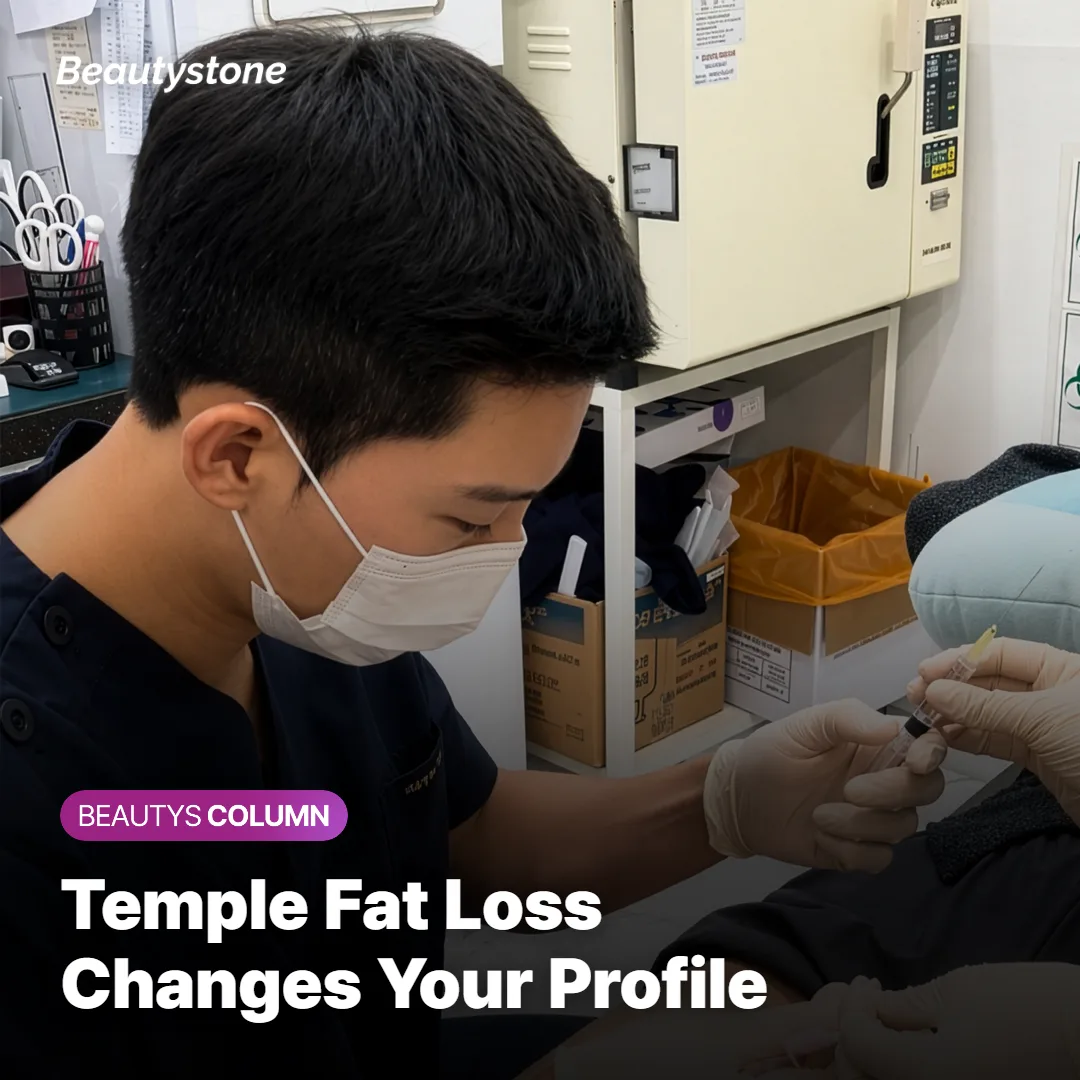
What Are Your Options for Filling Hollow Temples?
Broadly speaking, there are three ways providers approach hollow temples: filling the space directly, encouraging your own skin to rebuild collagen over time, or moving your own fat into the area.
HA (hyaluronic acid) filler adds volume immediately by drawing in water, so you see the result right at the visit. Collagen biostimulators, like Ellanse (a PCL-based filler), work differently — they add some volume up front, then gradually trigger your own collagen production over the following months, so the effect keeps developing well after the appointment. Autologous fat transfer takes fat from another part of your body and reinjects it into the temple, aiming for a natural, long-term result, though it's a bigger procedure with a longer recovery.
None of these is objectively "better" on its own — the trade-offs in speed, longevity, and how much recovery you're up for are different enough that the right pick really comes down to your own priorities.
HA Filler vs. Collagen Biostimulators vs. Fat Transfer: How Do They Compare?
Here's how the three options stack up on the things people usually ask about first.
| Category | HA Filler | Collagen Biostimulator (Ellanse) | Fat Transfer |
|---|---|---|---|
| When you see results | Immediately | Some volume right away, then builds gradually over months | Partial results right away; some of the transferred fat is reabsorbed over the following weeks |
| Typical duration | Roughly six months to a year | Can last one to several years, depending on the formulation | Often long-lasting once the transferred fat settles in |
| Reversibility | Can be dissolved with hyaluronidase if needed | No dissolving agent available | Not reversible once it settles |
| Procedure type | Quick in-office injection | Quick in-office injection | Minor surgical procedure with fat harvesting |
The honest trade-off is this: HA filler gives you an easy "undo" button and a shorter commitment, biostimulators ask for more patience upfront in exchange for results that build and last longer, and fat transfer trades a bigger recovery for what's often the most natural, durable outcome. None of these ranges are exact for every person — individual results vary quite a bit depending on your own tissue and metabolism.

Who's a Good Candidate for Temple Filler?
Good candidates usually fall into one of two camps: people who want to see a difference right away and don't mind repeating treatment down the line, and people who'd rather wait a bit longer for a result that sticks around. Before a consultation, it can help to look at your own temples in the mirror and get a sense of how hollow they actually are, and whether the shadow bothers you mostly from the front, the side, or both.
It's also worth thinking about your tolerance for bruising and swelling, since even a straightforward filler visit can leave some temporary marks, and planning around a big event — a wedding, a photoshoot — is usually easier if you build in a few weeks of buffer beforehand.
At Beautystone, a clinic in Seoul's Hapjeong neighborhood, providers typically start by assessing how much volume loss is actually there and how it fits with the rest of your facial balance, rather than defaulting to one product for everyone. Because the temple sits close to some larger blood vessels, providers who treat this area need a solid working knowledge of temple anatomy — that's worth asking about directly wherever you're considering treatment.
What Are the Side Effects and Risks?
Most reactions to temple filler are mild and show up in the first few days.
- Swelling and redness: usually settles within a few days to about a week.
- Bruising: common near blood vessels in this area, typically fades within one to two weeks.
- Firmness or a sense of fullness under the skin: softens over the following weeks as everything settles.
- Mild asymmetry: often just uneven swelling side to side rather than a filler problem, and it typically evens out on its own.
On the other hand, a few signs mean it's time to contact your provider rather than wait it out: skin turning pale, white, or mottled near the injection site (a possible sign of a vascular issue), sudden vision changes or severe pain, a lump that keeps growing or getting harder, or fever and spreading redness that could point to infection. If you notice any of these, seek medical care right away.
The temples carry larger blood vessels than a lot of other injection sites, which is the main reason this area calls for a provider who understands temple anatomy well and injects at a careful, consistent depth. This is general information, not personalized medical advice — talk to the provider who treated you about what's normal for your specific case.

How Much Does Temple Filler Cost?
Pricing for temple filler varies quite a bit depending on which option you choose, how much volume you need, and the clinic doing the work — there isn't one number that applies across the board. HA filler is usually priced per syringe, biostimulators like Ellanse are typically priced per session or per vial, and fat transfer is priced as a full procedure since it involves harvesting fat from elsewhere on your body.
Rather than guessing at a figure that may not apply to your case, the most reliable way to get an accurate estimate is a consultation, where a provider can assess how much volume you actually need. Beautystone lists current offers at /en/promotion, and pricing details for specific procedures are available at /en/price.
The Bottom Line
Hollow temples aren't really about weight loss — they're the result of a layered aging process that includes thinning collagen in the dermis, shrinking fat compartments, and subtle changes in the bone underneath. Your main options for filling them back in are HA filler (fast, reversible, shorter-lasting), collagen biostimulators like Ellanse (slower to build, longer-lasting, harder to reverse), and fat transfer (the biggest commitment, often the most natural long-term result). Like any procedure, each comes with trade-offs between speed, longevity, and how much recovery you're willing to take on.
Ultimately, the choice depends on your own anatomy, your goals, and how much patience you have for a gradual result. If you're considering treatment for hollow temples, a consultation is the best way to find out what fits you. Beautystone is a dermatology clinic in Seoul's Hapjeong area — see current offers at /en/promotion.
Frequently Asked Questions
Q1. Is hollow temple just from losing weight?
Not usually — it's typically the combined effect of thinning collagen in the deeper skin layer, shrinking fat compartments, and subtle changes in the bone underneath, rather than a simple drop in body fat.
Q2. Which lasts longer in the temples, HA filler or Ellanse?
Ellanse (a collagen biostimulator) typically lasts longer than HA filler — often one to several years versus roughly six months to a year for HA — though it's much harder to reverse if you're not happy with the result.
Q3. How much does temple filler cost?
It varies by the option you choose, how much volume you need, and the clinic, so there isn't one standard price. A consultation is the most reliable way to get an accurate estimate for your specific case.
Q4. Is temple filler safe?
It's generally considered safe when performed by a provider who understands temple anatomy well, since the area carries larger blood vessels than many other injection sites. Most side effects are mild — swelling, bruising, some firmness — though you should contact your provider right away if you notice skin discoloration, sudden vision changes, or severe pain.