

Beard Laser Hair Removal: Why the Bumps?
Complete Guide to Preventing Folliculitis After Beard Laser Hair Removal

Complete Guide to Preventing Folliculitis After Beard Laser Hair Removal
Hello!
I'm Dr. Wi Young-jin, a Seoul National University-trained specialist at Beautystone Clinic.
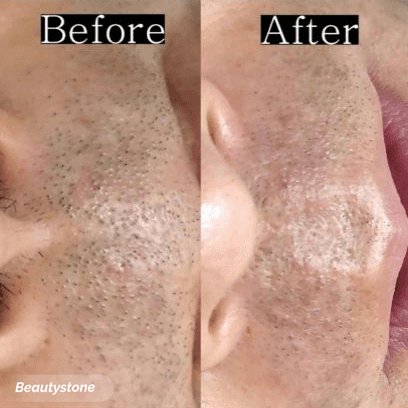
Many patients come to us concerned about small bumps that appear on their skin a few days after beard laser hair removal.
"Did something go wrong with the procedure?"
"Could it be an Infection?"
We receive these kinds of questions quite often.
To get straight to the point —
in most cases, what you're experiencing is
folliculitis (毛囊炎).
The good news is that with the right knowledge and care,
this condition is largely preventable.
- Why Folliculitis Occurs After Beard Laser Hair Removal
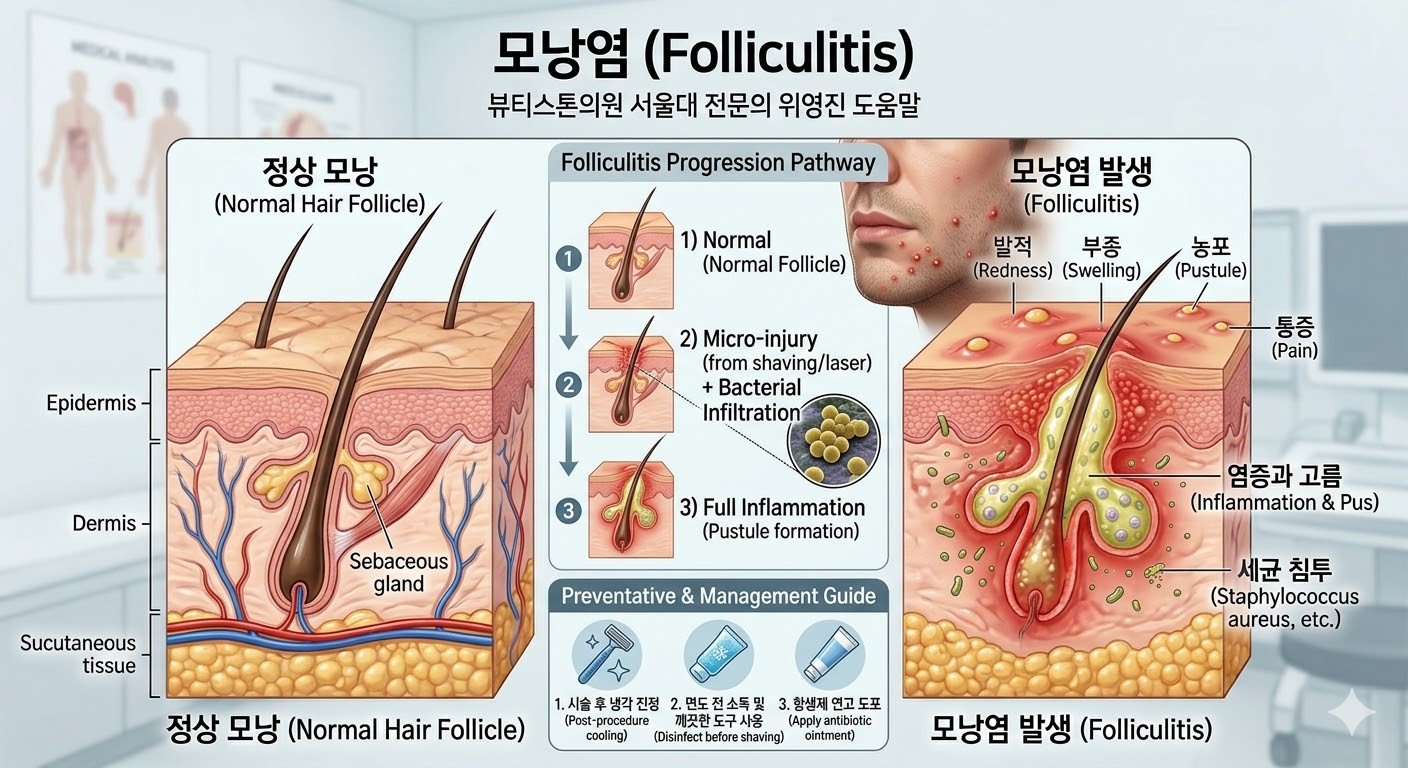
Laser hair removal works by targeting the melanin pigment inside the hair follicle,
using laser energy absorbed as heat to destroy the hair root.
During this process,
the surrounding follicular tissue becomes temporarily weakened,
and the skin's barrier function is briefly compromised.
This creates an opening for bacteria naturally present on the skin —
most notably Staphylococcus aureus —
to penetrate the hair follicle,
leading to folliculitis.
Simply put,
it's a situation where "bacteria enter a follicle that has been weakened by the laser."
In clinical practice, we frequently see this in patients who shave regularly.
Shaving itself causes repeated microtrauma to the skin,
and resuming shaving before the skin has fully recovered
significantly increases the risk of folliculitis.
- Who Needs to Be Extra Careful
Not everyone will develop folliculitis after the procedure,
but the likelihood does vary depending on your skin condition.
If any of the following apply to you,
extra diligent Aftercare is especially important.
Oily or Acne-prone skin
→ Excess sebum production makes follicles more prone to clogging
Shaving immediately after the procedure
→ Increases risk of bacterial entry when the skin barrier is compromised
Hot or sweaty environments (e.g., summer months)
→ Creates favorable conditions for bacterial growth
History of folliculitis
→ Higher likelihood of recurrence; weakened immune system
→ Reduced resistance to Infection
According to clinical practice guidelines,
the 24–48 hours following laser hair removal
represent the period when the skin barrier is at its most vulnerable.
During this window,
minimizing bacterial exposure is absolutely essential.
For those who experience chronic or recurring folliculitis,
it is advisable to address the skin condition with appropriate treatment
before proceeding with a hair removal procedure.
- Pre- and Post-Procedure Care to Prevent Folliculitis After Beard Hair Removal
Clinically speaking, folliculitis following laser hair removal
tends to result from insufficient Aftercare
rather than the procedure itself.
This is why at-home care is just as important as the in-clinic procedure.
In particular, during the first 24–48 hours after the procedure,
the following guidelines must be strictly followed.
First, avoid touching the treated area with your hands.
Your hands carry far more bacteria than you might expect.
Second, avoid hot water Face cleansing, saunas, and steam rooms
for at least 48 hours.
Heat stimulation can amplify the inflammatory response.
Third, delay shaving for at least 3–5 days after the procedure.
If shaving is necessary, using an electric razor is the safer option.
Fourth, apply all prescribed Moisturizing creams and Calming products without fail.
These are key to accelerating skin barrier recovery.
At Beautystone Clinic,
we use the GentleMax Pro Plus device.
Its integrated Cooling system actively lowers the skin temperature during the procedure,
which helps reduce follicular damage caused by Heat sensation.
However, regardless of the equipment used,
folliculitis can still develop if post-procedure care is neglected.
Frequently Asked Questions (FAQ)
Q1. I already have folliculitis. What should I do?
A. If the area is red, Swelling, or accompanied by pus,
do not squeeze or touch it under any circumstances.
Mild cases may improve with topical antimicrobial agents, but if symptoms persist for more than 2–3 days
or worsen over time, it is important to visit a dermatology clinic,
as antibiotic treatment may be necessary.
Q2. How many sessions does beard laser hair removal typically require?
A. Generally, 6–10 sessions are needed. Hair follicles cycle through anagen (growth), catagen (regression), and telogen (resting) phases, and laser energy is only effective on hairs in the active anagen phase.
This is why multiple sessions at regular intervals are required.
The exact number of sessions may vary depending on each individual's hair thickness and density.
Q3. What should I look for when choosing a clinic near Seoul or Hongdae?
A. It's important to confirm whether the procedure is performed directly by a licensed physician,
whether the equipment is clinically validated,
and whether comprehensive post-procedure care instructions
are provided in a structured manner.
The beard area has a high concentration of sebaceous glands and thicker skin,
which means clinical experience in precisely adjusting laser intensity and treatment intervals
is critically important.
We welcome patients visiting us from nearby areas including Sinchon, Ewha, and Mangwon.
When it comes to beard hair removal,
preventing folliculitis depends just as much on thorough pre- and post-procedure care
as on the procedure itself.
During your consultation,
we take the time to walk you through all relevant precautions in detail,
and if you have any concerns about your recovery,
you are always welcome to come in for a follow-up check at any time.
We warmly invite you to visit Beautystone Clinic in the Seoul/Hongdae area
for a personal consultation directly with our director physician —
we'll guide you through every step with care.


