Jaw vs. Forehead Botox: 2 Very Different Goals
Jaw Botox and forehead Botox aren't interchangeable — one softens a square jawline by shrinking the masseter, the other relaxes expression lines. Here's how to figure out which one to try first in your 20s.

If you're in your 20s and just starting to look into Botox, chances are you've landed on two very different areas: your jawline and your forehead. Both get requested constantly, but they're not solving the same problem. One softens the angle of a square jaw. The other smooths the lines that show up when you raise your eyebrows or look surprised. Picking whichever one sounds more popular, without knowing what it actually does, can leave you disappointed with the result.
In this article, we'll cover how each treatment actually works, how fast you'll notice a difference, what the trade-offs look like, and how to figure out which one matches what's actually bothering you in the mirror.
What's the Difference Between Jaw Botox and Forehead Botox?
The short answer? Jaw Botox targets muscle bulk. Forehead Botox targets muscle movement. Jaw Botox, sometimes called masseter Botox, relaxes the chewing muscle at the corner of your jaw so it gradually shrinks, which softens a wide or angular jawline. Forehead Botox works on the muscle that creates horizontal lines when you raise your eyebrows — it doesn't shrink anything, it just dials down how hard that muscle can contract, so the lines don't fold as deeply when you make an expression.
That distinction matters because it changes what you should expect walking in. If your concern is a wide, boxy jaw, forehead Botox won't touch it. If your concern is the lines that show up when you're surprised or concentrating, jaw Botox won't do much for that either. Figuring out which one actually matches what bothers you is the real first step, more than picking whichever area is trending.
How Does Jaw Botox Work?
Jaw Botox is injected into the masseter — the thick, flat muscle you can feel bulge when you clench your back teeth. In people with a strong or overdeveloped masseter, that muscle pushes the jawline outward and reads as a squarer silhouette. Botox relaxes the muscle so it stops contracting as forcefully, and over the following weeks, the muscle itself starts to shrink from disuse.
This isn't an overnight change. One review of masseter Botox injections found that muscle volume starts decreasing around the three-week mark, with an average reduction of roughly 20% to 30% by the time the effect fully settles in. That review is a good reminder that the timeline runs in weeks, not days — a much slower rollout than a lot of first-timers expect.
It's also worth knowing that not every square jaw comes from muscle. Some people have a naturally angular bone structure, and Botox can't soften that since it only works on muscle bulk. If your jaw looks wide even when you're not clenching, that's worth bringing up with your provider before you book anything.

How Does Forehead Botox Work?
Forehead Botox runs on a different mechanism entirely. The muscle across your forehead contracts every time you raise your eyebrows, and over years of repeated movement, that contraction creases the skin into visible lines. Botox temporarily weakens the muscle's ability to contract, so the lines don't fold as deeply when you make an expression. It's softening movement, not reducing volume.
Because there's no muscle shrinkage involved, forehead Botox tends to show results faster than jaw Botox. Research on upper-face injections generally points to visible changes starting within a couple of days, with the full effect settling in somewhere between one week and a month, and results typically lasting three to four months.
One caveat: your forehead muscle is directly tied to how you raise your eyebrows, so too much product can leave your expressions feeling flat or make your brows sit heavier than usual. If this is your first time, a lighter, more conservative dose is the safer starting point — your provider can always add more at a follow-up once they see how you respond.
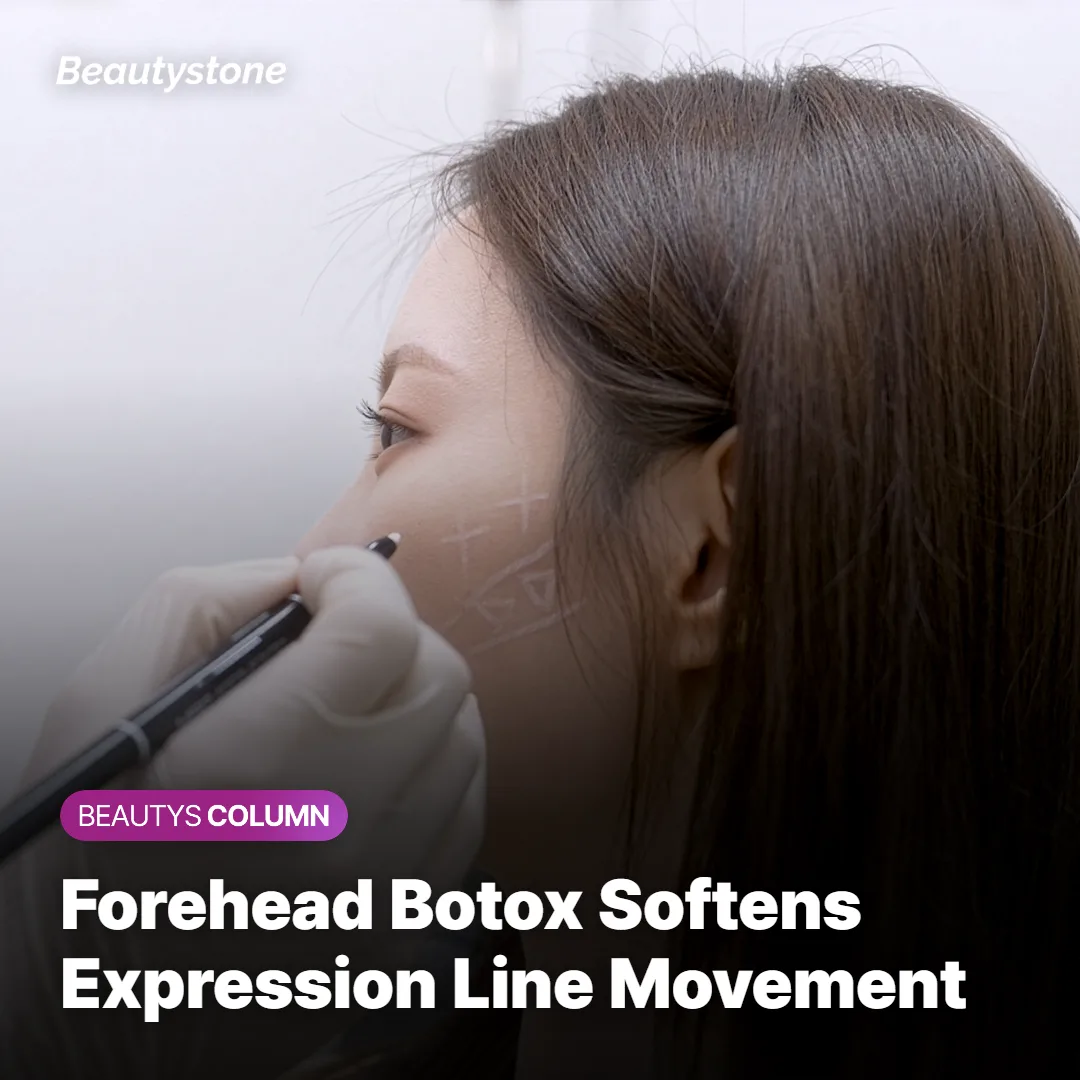
Jaw Botox vs. Forehead Botox: Key Differences
Here's a side-by-side look at how the two compare.
| Category | Jaw Botox | Forehead Botox |
|---|---|---|
| Target muscle | Masseter (jaw muscle) | Forehead muscle |
| How it works | Reduces muscle bulk | Softens muscle movement |
| When results start | Around 3 weeks | 2 days to 1 week |
| How long it lasts | About 6 months | 3 to 4 months |
Onset and duration aren't the only variables at play, either. How fast you personally notice results, and how long they stick around, also depends on your muscle strength, how often you make certain expressions, and the dose your provider settles on.
Which One Should You Try First?
If a wide or square jawline is what bothers you when you look in the mirror, jaw Botox is usually the more direct starting point, since it's addressing the actual source of that shape. If it's the lines that show up when you raise your eyebrows or look surprised, forehead Botox is the one built for that job.
Some first-timers end up trying both, spaced a few weeks apart, once they've seen how their own muscles and skin respond to the first round. There's no rule that says you have to commit to just one forever — plenty of people start with whichever area bothers them most and revisit the other one later.
Keep in mind that your muscle strength, how expressive you naturally are, and even your skin thickness all factor into how noticeable the change ends up being. Individual results vary quite a bit here, so it's worth going in with realistic expectations rather than picturing a dramatic before-and-after.
Side Effects & Safety for First-Timers
Botox is generally well tolerated, but it's not without risk, and first-timers should know what's normal versus what's worth a call to your provider.
- Mild bruising or tenderness: Common at the injection site and usually fades within a few days.
- Temporary asymmetry: Your face may feel or look slightly uneven while the product settles in over the first one to two weeks.
- Mild headache: Some people notice a short-lived headache after forehead injections in particular.
- Heavy brow or flat expression: More likely with too high a dose in the forehead; a conservative starting dose lowers this risk considerably.
Most of these settle on their own within a few days. That said, if you notice spreading redness, fever, drooping that doesn't improve, or pain that gets worse instead of better, contact your provider or seek medical care right away — those aren't symptoms to wait out.
Botox (botulinum toxin type A) is FDA-approved for a range of medical uses, including chronic migraine and certain muscle disorders. Using it for jaw slimming or forehead wrinkle-softening is generally considered off-label in the U.S. — common in dermatology, but worth asking your provider about directly.

How Much Does It Cost?
Pricing for jaw and forehead Botox varies by clinic, by how many units your provider recommends, and by your specific anatomy — there's no single number that applies to everyone. Jaw Botox tends to run higher than forehead Botox since the masseter usually needs more units to get a visible effect, but the exact gap depends on your muscle size and the clinic's per-unit pricing.
A consultation is really the only reliable way to get a number that applies to you, since your provider needs to look at your muscles in person before recommending a dose. If you're curious about current offers, it's worth checking what Beautystone, a clinic in Seoul's Hapjeong neighborhood, has listed on its promotions page at /en/promotion.
The Bottom Line
Jaw Botox and forehead Botox aren't interchangeable. One shrinks a muscle over several weeks. The other softens movement within days. Here's the recap:
- Jaw Botox relaxes the masseter so it gradually shrinks, softening a square jawline over about three weeks and lasting around six months.
- Forehead Botox relaxes the muscle behind expression lines, showing results within days to a few weeks and lasting three to four months.
- If a wide jaw is your main concern, start there. If it's expression lines, forehead is the more direct fix.
- Some first-timers eventually do both, spaced apart, once they've seen how they personally respond.
Like any procedure, it comes with trade-offs — jaw Botox takes patience, and forehead Botox needs a light touch to avoid a flat expression. Ultimately, the choice depends on what's actually bothering you, your muscle anatomy, and your provider's read on your face.
If you're considering either treatment for the first time, a consultation is the best way to find out what fits you. Beautystone is a dermatology clinic in Seoul's Hapjeong area — see current offers at /en/promotion.
Frequently Asked Questions
Q1. What's the difference between jaw Botox and forehead Botox?
Jaw Botox targets muscle bulk — it relaxes the masseter so it gradually shrinks, softening a wide or angular jawline. Forehead Botox targets muscle movement instead, dialing down how hard the muscle contracts so expression lines don't fold as deeply. They solve different concerns, so picking the right one depends on what's actually bothering you.
Q2. Should I get jaw Botox or forehead Botox first?
It really comes down to your main concern — if a wide or boxy jawline bothers you more, jaw Botox is the relevant treatment, and if expression lines on your forehead are the issue, forehead Botox addresses that instead. There's no universal 'start here' answer, since the two treatments don't overlap much in what they change.
Q3. How much does Botox typically cost?
Pricing varies quite a bit depending on the clinic, the number of units used, and which area is treated, so it's hard to give one number that applies everywhere. It's best to get a personalized quote after a consultation, since dosage needs differ from person to person.
Q4. Are there side effects to worry about as a first-time Botox patient?
Both jaw and forehead Botox are generally considered safe when done by an experienced provider, but temporary side effects like bruising, mild soreness, or an uneven result are possible, especially while you're still learning how your body responds. Starting with a conservative dose and discussing your concerns openly with your provider helps reduce that risk.