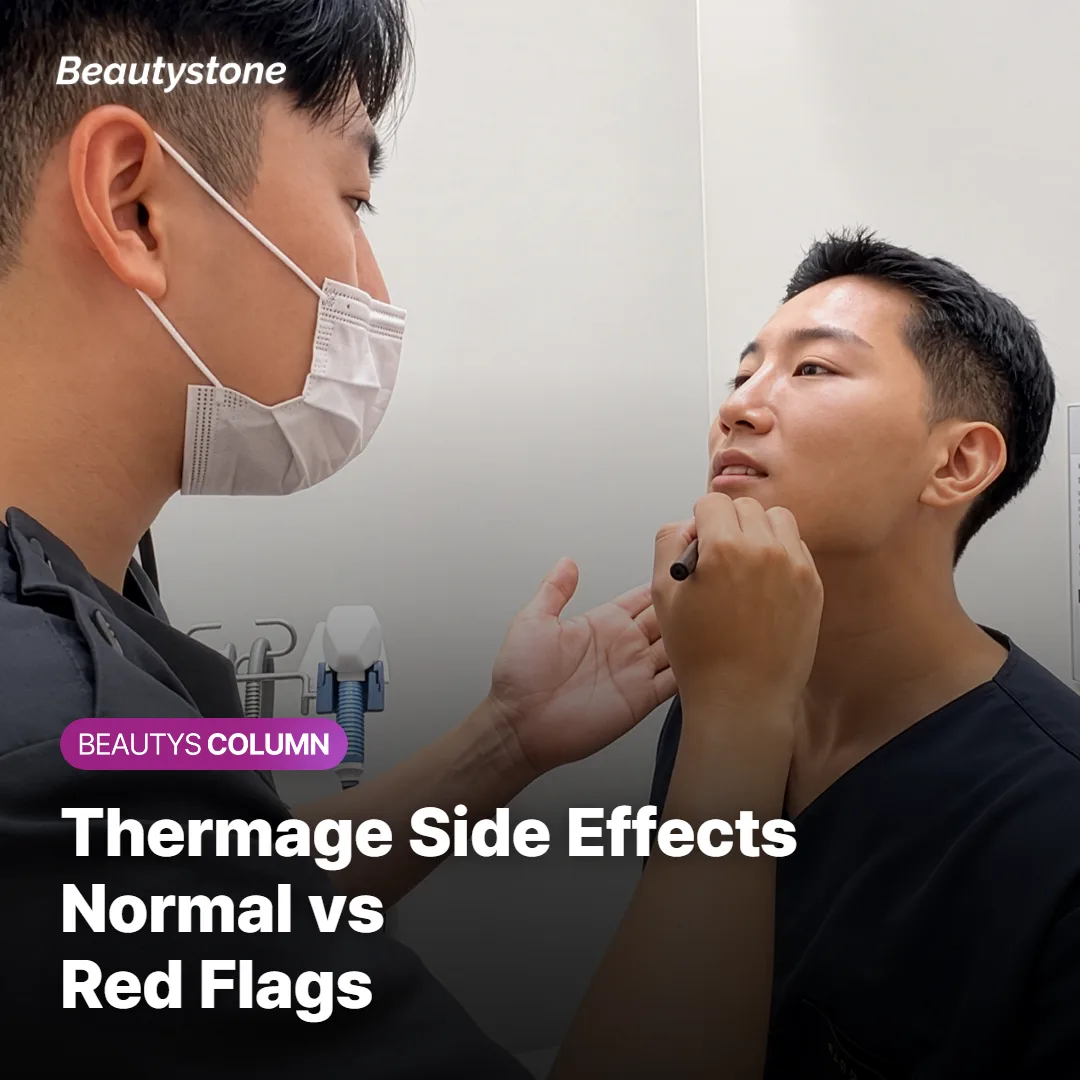
Thermage Side Effects: Normal vs. Red Flags
A little redness and warmth after Thermage is normal — but not every reaction is. Here's how to tell an expected response from a sign you should call your provider, plus how long normal side effects typically take to fade.

A little redness and warmth after Thermage is completely normal — most people notice it while they're still in the treatment chair. But how do you know when a reaction is just your skin doing what it's supposed to do, and when it's a sign that something didn't go as planned?
In this article, we'll cover what actually causes the heat and redness you feel right after treatment, which reactions are expected and which ones deserve a call to your provider, how long normal side effects typically take to fade, and what you can do before and after your session to keep your risk as low as possible.
What Is Thermage, and How Is It Different From Ultherapy?
Thermage FLX is a radiofrequency (RF) device that delivers heat energy into the deeper layers of your skin — the dermis and the tissue just beneath it — to encourage new collagen and gradually tighten skin over time.
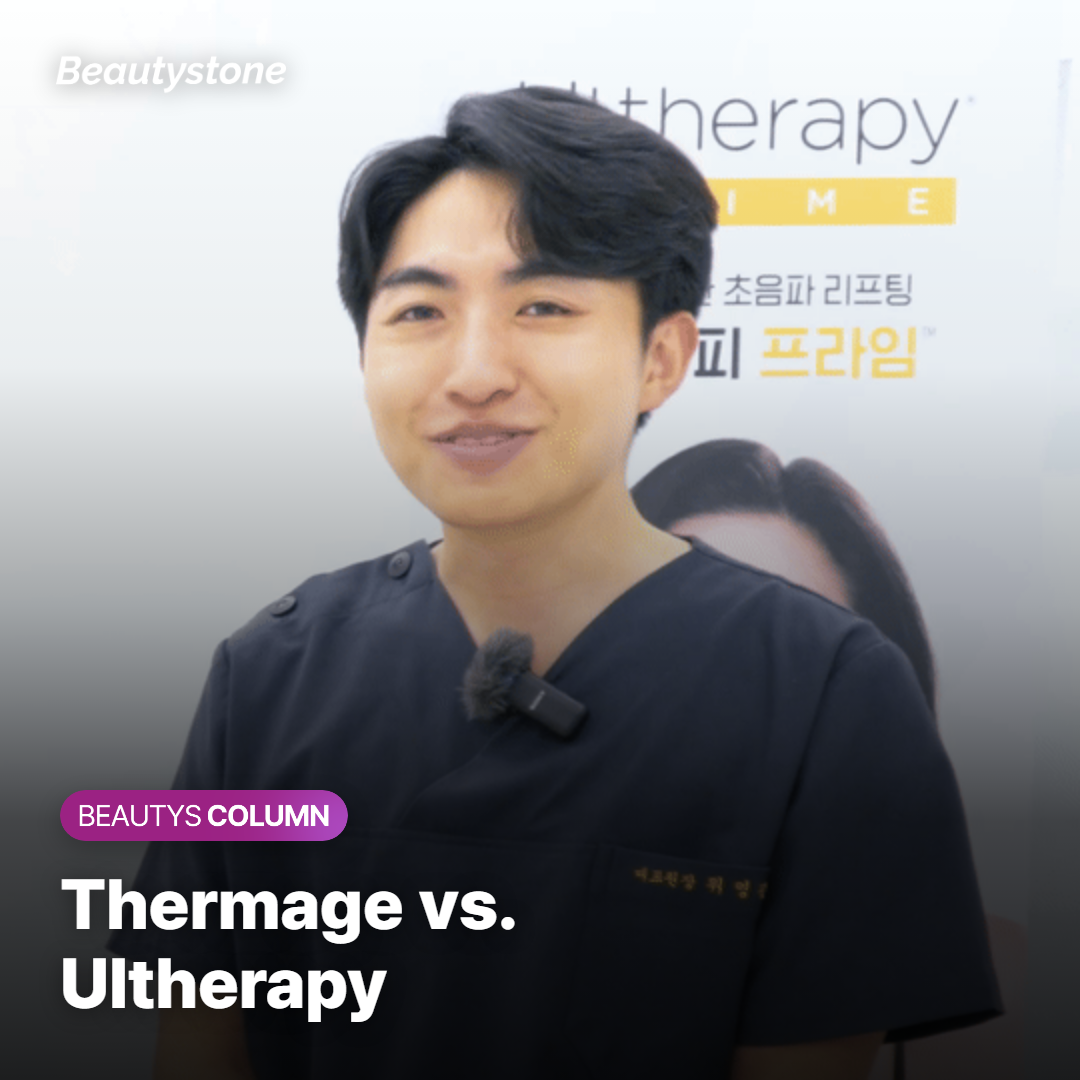
It's often mentioned alongside Ultherapy, but the two work differently. Ultherapy uses focused ultrasound (HIFU) to target the SMAS layer, the deeper fibrous layer usually addressed in a surgical facelift. Thermage, on the other hand, uses RF energy to heat the dermis more broadly, aiming for firmer, tighter-feeling skin rather than a lifted fascia.
That difference in approach is also part of why the two treatments come with a different side effect profile — which is what the rest of this article is about.
Why Redness and Warmth Happen After Thermage
If your face feels flushed and warm right after a session, that's not a malfunction — it's largely the point.
The device's tip cools your skin's surface while RF energy is delivered to the dermis underneath, typically reaching a temperature that makes collagen fibers contract. That contraction is what kicks off the remodeling process: over the following three to six months, your body gradually builds new collagen, which is where the slow, cumulative firming effect comes from.
Some redness, warmth, and mild swelling right after your session is generally a sign the energy reached where it needed to — not a red flag on its own. If there's zero reaction at all, it's fair to ask your provider whether the energy level was set high enough to do much of anything.
The real question isn't whether you react. It's how that reaction behaves over the next few days.
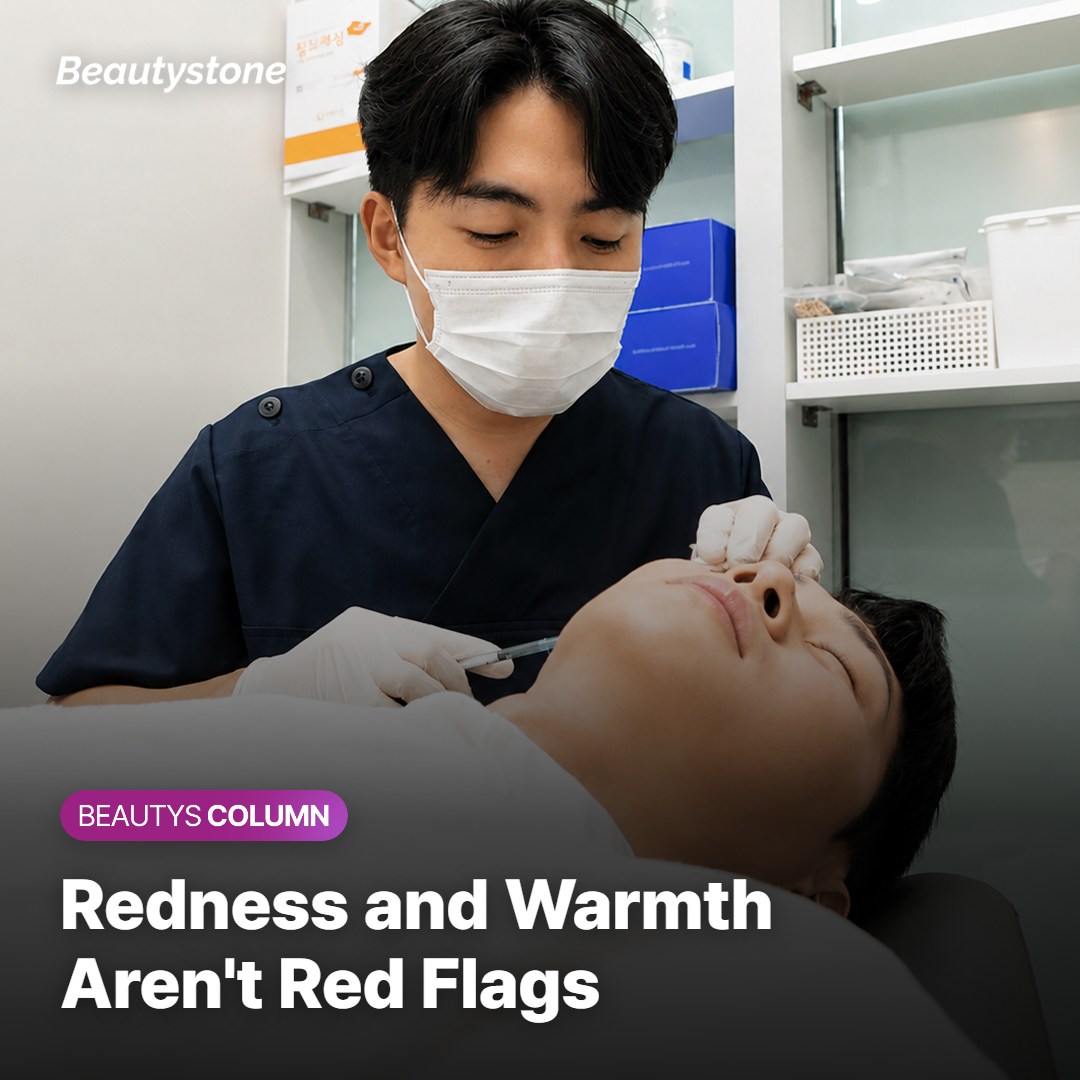
Thermage Side Effects and Risks: When Something's Wrong
Here's the short version: normal reactions show up right away and fade within a few days. Reactions worth calling your provider about tend to look different — in what they look like, how long they stick around, or both.
Normal and expected: Redness, a warm or tingling feeling, and mild swelling. These typically peak within the first few hours and settle within 24 to 72 hours on their own.
Worth watching, not panicking: Swelling that lingers past three days, or a brief tingling or numb sensation in one spot. These usually clear up within one to two weeks, though it's worth letting your provider know so they can keep an eye on it with you.
Contact your provider right away: Brown or white patches of discoloration, pain that's still sharp or throbbing after three days, or any blistering. These can point to energy that was delivered unevenly to one area, and left unaddressed, they carry a real risk of lasting marks.
Discoloration in particular can be sneaky. It isn't always obvious right after treatment — sometimes it shows up gradually over the following days, which makes it easy to write off as just how your skin looks right now. If you notice a patch that's browner, paler, or just off from the rest of your skin days after your appointment, don't wait it out.
The same goes for pain. Some tenderness on the day of treatment is expected. Pain that's still sharp when you press on it, or that hasn't eased up at all after three days, isn't something to push through — it can point to nerve or tissue irritation that needs a professional look.
| Reaction Type | What It Looks Like | How Long It Lasts | What To Do |
|---|---|---|---|
| Normal | Redness, warmth, mild swelling | 24–72 hours | Gentle skincare, let it settle on its own |
| Monitor | Swelling past 3 days, brief tingling or numbness | 1–2 weeks | Update your provider, keep watching it |
| Red flag | Discoloration, persistent sharp pain, blistering | Won't resolve on its own | Contact your provider right away |
A clear photo can be worth more than a written description here — if you're not sure whether something looks normal, sending a photo to the clinic where you were treated is usually the fastest way to get a real answer.
It's also worth saying: having a side effect doesn't automatically mean something was done wrong. Skin condition, energy settings, how your body happened to be that day, and even medication or your cycle can all play a role in how you react. What matters most is catching anything unusual early and following up on it, rather than assuming it'll sort itself out.

How Long Do Side Effects Last? A Realistic Timeline
- Day of treatment: Redness, warmth, and mild swelling are common and often visible while you're still in the chair.
- 24 to 72 hours: Normal redness and swelling should be fading or gone by now.
- 1 to 2 weeks: Any lingering swelling, tingling, or mild uneven texture typically evens out during this window.
- 3 to 6 months: Collagen remodeling is most active here, and the gradual firming effect keeps building.
- 1 to 2 years: Results tend to hold in this range, though it varies quite a bit by age, skin condition, and lifestyle — many people schedule a yearly touch-up to maintain them.
If anything on this list — discoloration, sharp or worsening pain, blistering — is still around past the point where it typically settles, that's the cue to reach out rather than wait another week.

Before and After: How to Lower Your Risk
A good chunk of side effect risk comes down to two things: your skin's condition going in, and what you do with it in the days right after.
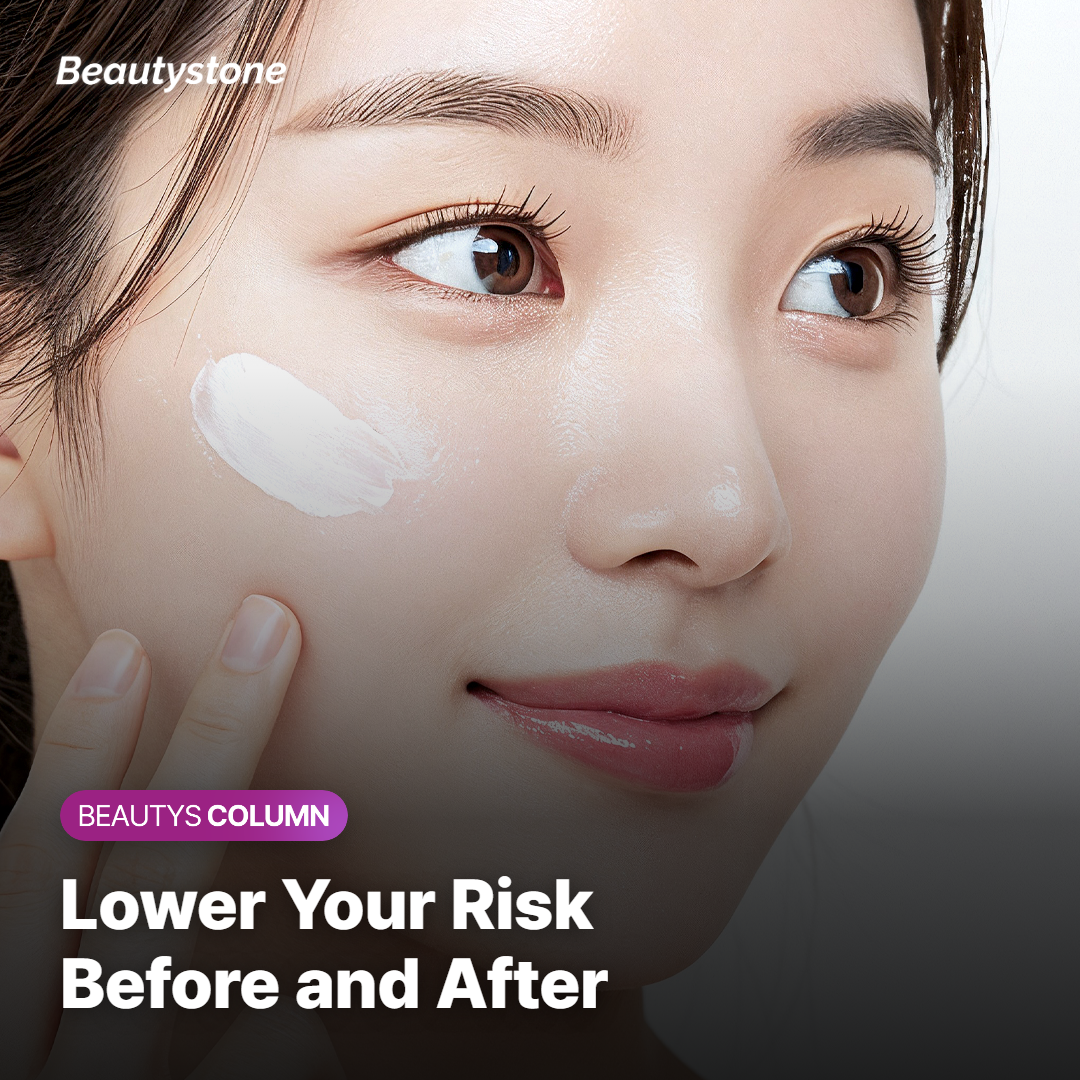
Before your session: Stop retinol, AHAs, and other irritating actives about two weeks out. Postpone treatment if your skin is unusually sensitive, broken out, or inflamed. Thermage isn't recommended during pregnancy, or if you have metal implants or a pacemaker — mention any of these to your provider upfront.
Right after your session: Skip the sauna and intense workouts for the rest of the day, since added heat and blood flow can amplify the normal reaction. Sun protection matters more than usual, too — your skin barrier is temporarily more reactive, which raises the risk of pigmentation if it's left exposed.
None of this makes a side effect impossible, but it meaningfully lowers the odds in your favor.
How Much Does Thermage Cost?
Thermage pricing varies quite a bit depending on the clinic, how much surface area is treated, and the specific energy protocol your provider recommends — there's no single number that applies across the board.
What most people find is that it's priced as a meaningful investment rather than a quick add-on, and some providers offer package pricing if you're planning a yearly touch-up. Because it varies so much by provider and treatment plan, a consultation is really the only reliable way to get a number that applies to you — see current offers at /en/promotion.
The Bottom Line
Redness, warmth, and mild swelling after Thermage are normal, expected parts of how the treatment works — not a sign anything went wrong. What actually deserves attention is discoloration, pain that's still sharp after a few days, or blistering, since those can point to energy that wasn't delivered evenly.
Like any energy-based treatment, Thermage comes with trade-offs, and how your skin responds can vary from one session to the next. If you notice anything that doesn't match the normal timeline above, don't wait it out — reach out to the provider who treated you.
Ultimately, the choice to treat — and whether to repeat it later on — depends on your skin, your goals, and how your body tends to respond to heat-based treatments. If you're considering Thermage, a consultation is the best way to find out what's realistic for you. Beautystone is a dermatology clinic in Seoul's Hapjeong district — see current offers at /en/promotion.