

Thermage Price vs. Energy: What Matters?
Beyond price comparisons — here's what actually determines your Thermage results: dermis-level energy design.

What You Miss When You Only Compare Thermage Prices
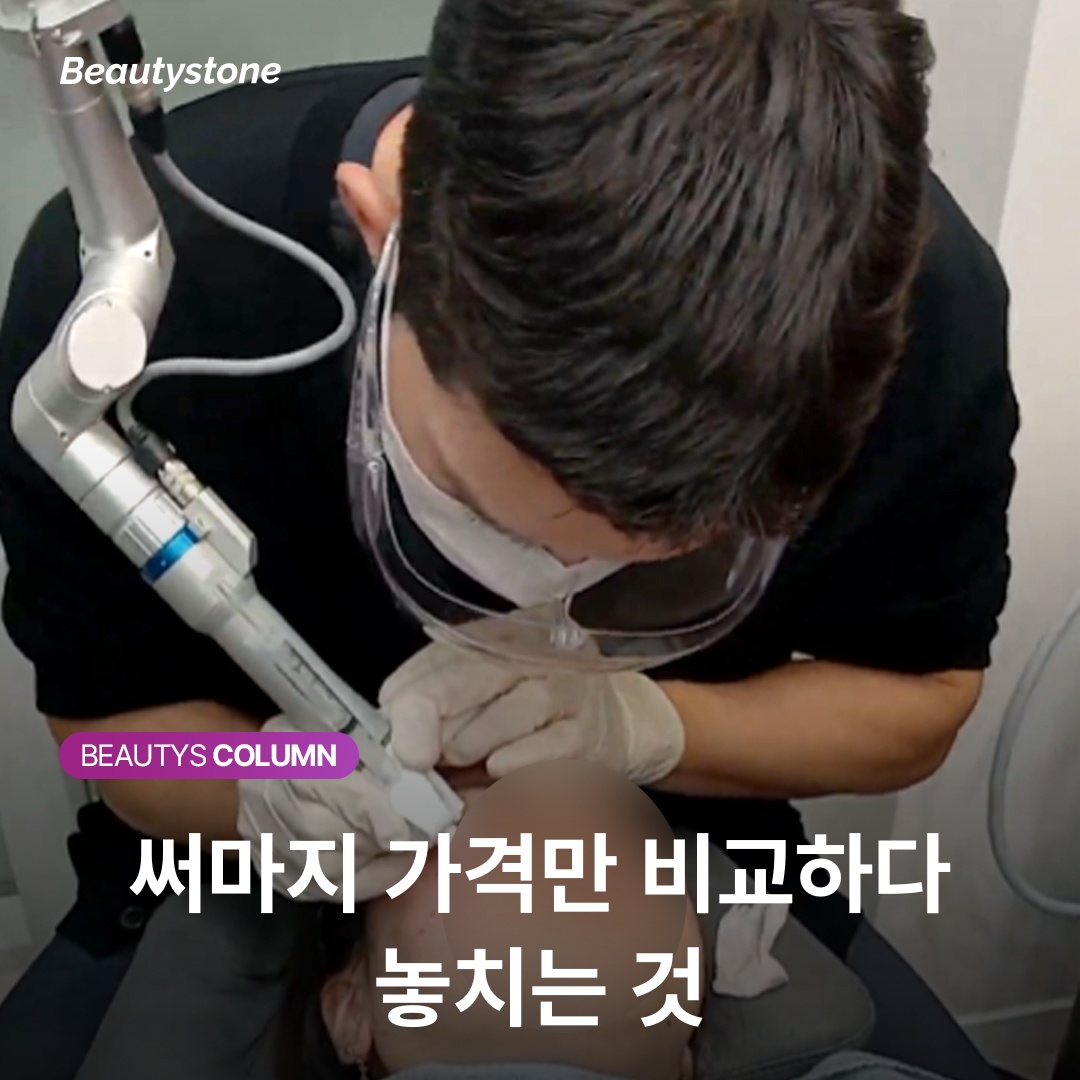
When people search for Thermage, the first thing that comes up is price comparisons — how much for 600 shots, how much for 900, which clinic is cheapest. But when patients receive the same number of shots on the same device and still see very different results, the reason is never found on the price tag.
Thermage is not a procedure where the device generation determines your outcome. What actually makes the difference is how consistently and precisely the energy is delivered to the right depth within the Dermis.
Thermage Works by Slowly Building Deep Heat in the Skin
Thermage uses Radiofrequency (RF) energy to heat the Dermis and stimulate new Collagen production.
*Radiofrequency (RF): A form of energy that delivers heat deep into the skin — not to the surface, but to the inner Collagen layer where structural remodeling occurs.
The key principle is this: heat the deeper layers sufficiently while simultaneously Cooling the surface. That's why even with the same number of shots, outcomes can vary significantly depending on how long the applicator dwells in each area, how much pressure is applied, and when the Cooling cycle is timed.

The Generation Gap Is Smaller Than You Think
Many patients focus on device generations — Thermage FLX versus CPT — but honestly, what determines your results isn't the generation. It's the energy settings. Even a 0.5-level difference in energy output can change how satisfied you are with the outcome.
A clinic that recently purchased the latest device doesn't automatically deliver better results. In many cases, a provider who knows their device inside and out and applies it with precision will produce more consistent, reliable outcomes.

The Shot-Count Competition Is a Trap
As 600 shots became the perceived standard, more clinics started competing by advertising higher shot counts. But increasing shots without proper zone-by-zone mapping means accumulated stimulation can outweigh the intended benefit.
When every area — including thin-skinned zones and areas with minimal subcutaneous fat — is treated with the same flat approach, you risk unwanted volume loss or temporary sagging in those regions.

Your Results Follow the Pace of Collagen Recovery
After Thermage, the most meaningful changes typically unfold gradually over 3 to 6 months. The immediate tightening sensation you feel right after the procedure is due to temporary protein contraction — the real results come from the new Collagen that builds up over time.
Most patients maintain their results for 1 to 2 years, though this varies depending on skin condition and how quickly laxity progresses. This is not a procedure that needs to be repeated every year, and receiving it too frequently does not lead to compounding improvements.

**Q. Should I get Thermage or Ultherapy first?** A. These two procedures target different layers of the skin. If surface Elasticity and Fine Lines are your primary concern, Thermage tends to be the better fit. If you're dealing with deeper laxity and structural sagging, Ultherapy is often the more appropriate choice.
**Q. How long do results last after one session?** A. Generally speaking, results last around 1 to 2 years — but this can vary considerably based on your rate of aging and lifestyle habits.
**Q. Can I go out right after the procedure?** A. Some mild Erythema is possible, but it typically resolves the same day. For the first day or two, it's best to avoid intense UV exposure and saunas.
Frequently Asked Questions
Q1. Why do Thermage results vary even with the same shot count?
Because outcomes depend on how consistently and precisely the energy is delivered to the right depth in the dermis, not just the number of shots. How long the applicator dwells in each area, how much pressure is applied, and cooling timing all make a difference.
Q2. Does a newer Thermage device generation give better results?
Not necessarily — the generation gap is smaller than most people think. Energy settings and how skillfully the provider applies the device tend to matter more than whether it's the latest model.
Q3. Is a higher Thermage shot count always better?
No — increasing shots without proper zone-by-zone mapping can lead to unwanted volume loss or temporary sagging, especially in thin-skinned areas or spots with minimal subcutaneous fat.
Q4. How is the price of Thermage determined?
Pricing is often compared purely by shot count, but that comparison misses what actually drives results — the provider's precision and settings. It's best to ask your clinic for a quote that reflects their specific approach rather than shot count alone.