

Oligio X: How 1 Cooling System Cuts the Sting
Worried Oligio X will be painful because it uses radiofrequency heat? Most people describe it as warm with the occasional quick pinch, not a burn -- and how it feels depends heavily on the area treated and whether numbing cream is used.

If the words "radiofrequency" and "heat" in the same sentence make you brace for a scorching, hard-to-sit-through treatment, you’re not alone. Pain is one of the biggest reasons people put off trying a device like Oligio X in the first place.
Here’s the short version: most people describe Oligio X as warm, with the occasional quick, sharp pinch as the energy fires — not the kind of burning discomfort you’d associate with an actual burn. How intense it feels really does depend on the area being treated and how sensitive your skin is that day.
In this article, we’ll cover what the sensation actually feels like, why some areas sting more than others, what tends to make the pain worse, whether you actually need numbing cream, and what helps before and after your session.
Does Oligio X Hurt? What the Sensation Actually Feels Like
Most people describe Oligio X as more “hot” than “painful” — a warm build-up followed by a brief, sharp pinch each time the device fires, rather than a burning sensation that lingers.
That distinction comes down to how the device works. Oligio X sends monopolar radiofrequency energy into the dermis to heat collagen, while a cooling tip keeps the skin’s surface comfortable at the same time. Heat goes in, cooling happens on the surface — which is why the feeling reads as a quick thermal jolt rather than anything close to a burn.
Clinical descriptions of monopolar radiofrequency skin-tightening treatments consistently note this kind of brief, localized heat sensation rather than sustained pain, and that the discomfort typically eases the moment the handpiece moves to the next spot.
How the Cooling System Changes What You Feel
The reason Oligio X doesn’t feel like a burn comes down to timing, not just temperature.
Older-style heat treatments sometimes let the surface get uncomfortably warm before the deeper tissue caught up. Oligio X’s cooling tip runs at the same time as the energy pulse, so the epidermis stays in a tolerable range while the heat that actually matters is happening a few millimeters down, in the dermis.
That’s also part of why the sensation is usually described as brief rather than building: the surface cooling resets almost immediately after each pulse, so there’s little carryover discomfort from one pass to the next.
Which Areas Hurt More? A Region-by-Region Breakdown
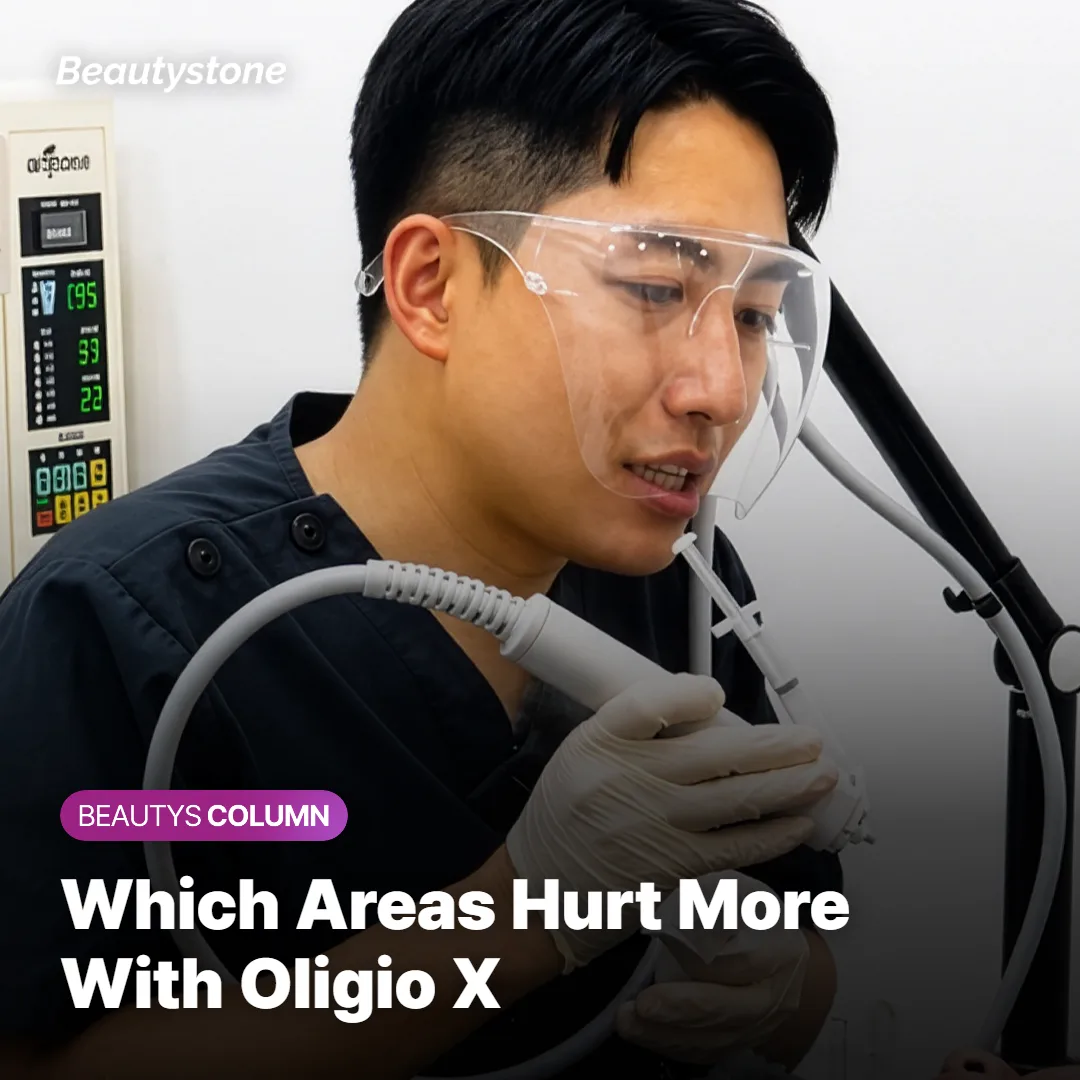
Pain isn’t uniform across the face. Thinner skin and areas closer to bone tend to register more sensation than fuller, fleshier areas.
| Area | Typical Sensation | Numbing Cream |
|---|---|---|
| Cheeks | Mild warmth | Usually not needed |
| Forehead | Noticeable pinch | Optional |
| Jawline & chin | More pronounced | Often helpful |
| Under-eye area | Most sensitive | Frequently recommended |
If you’re having a full-face session, it’s common for the intensity to shift as your provider moves between these areas — worth knowing ahead of time rather than a sign that anything’s off.
What Makes the Pain Feel Worse — And How to Dial It Down
A handful of factors change how much a session hurts, and most of them are things you can influence.
- Higher energy settings: More energy per pulse means a sharper, more noticeable sensation.
- Sensitive areas: The jawline, mouth area, and under-eyes sit closer to nerve endings, so they tend to register more.
- How you’re feeling that day: Poor sleep and hormonal shifts around your cycle can temporarily lower your pain threshold.
- Tension: Clenching or bracing for the next pulse tends to make each one feel more intense than it actually is.
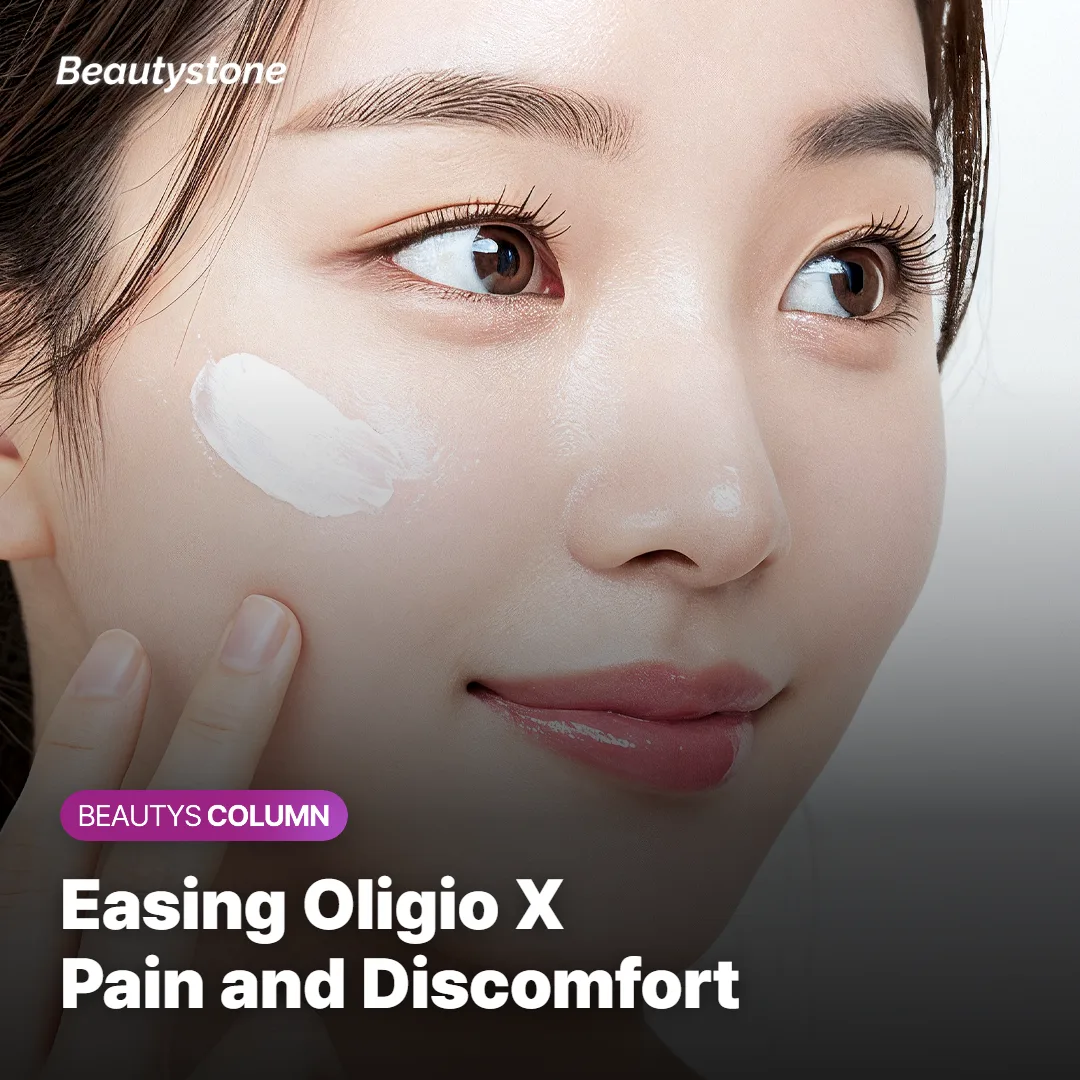
A few things help take the edge off. Speak up the moment something feels too hot — your provider can lower the energy or slow down. Cutting back on caffeine beforehand and taking slow, steady breaths during the session both tend to make a real difference, since the discomfort is brief and localized to each pulse.
Do You Need Numbing Cream?
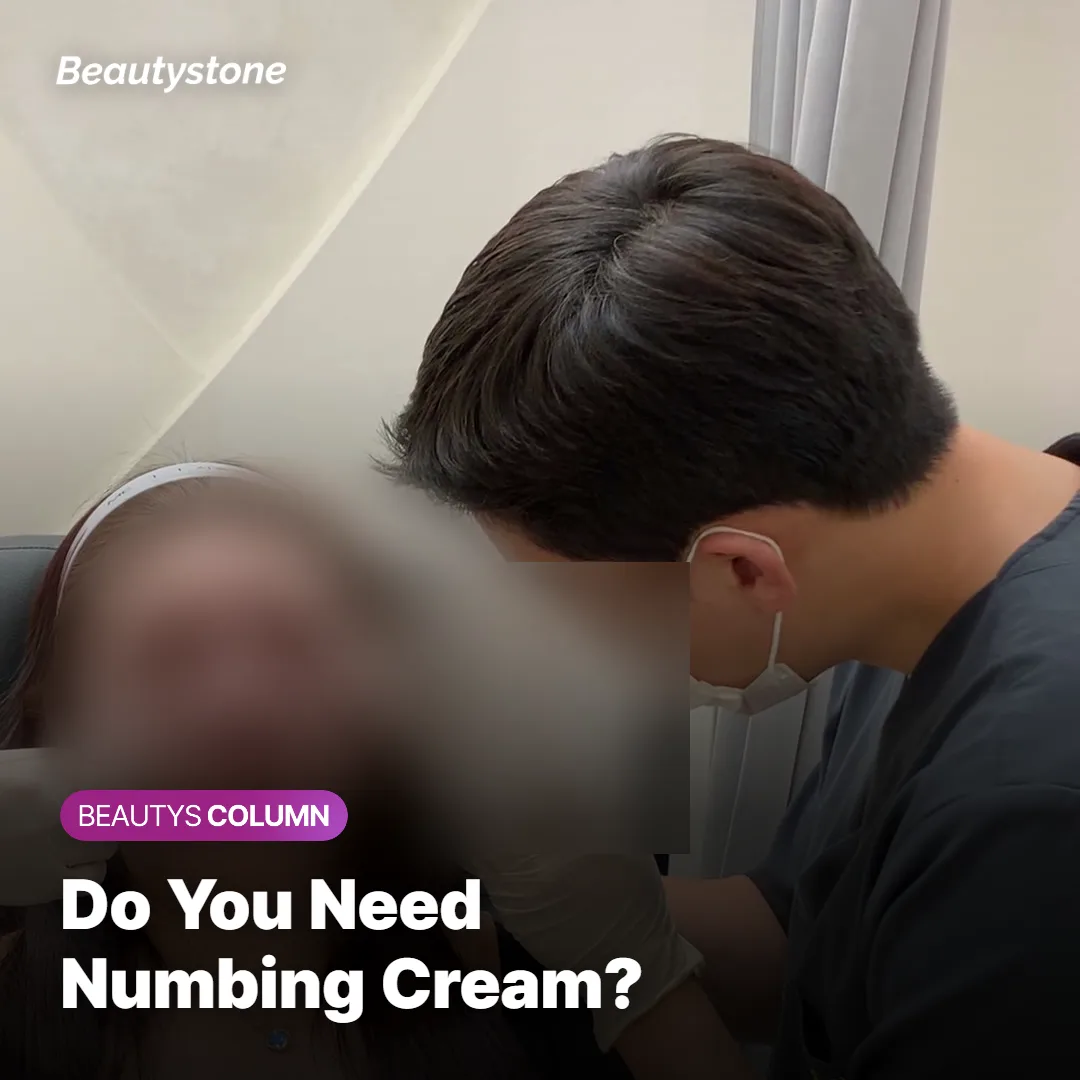
Not usually. Most people get through Oligio X without it, since the cooling tip keeps the surface at a manageable temperature throughout the session. That said, topical numbing cream makes sense in a few situations.
- You’re sensitive to pain in general: If injections or other minor procedures tend to bother you, numbing cream is worth requesting.
- You’re treating sensitive zones: Sessions focused on the jawline, mouth area, or under-eyes are more likely to benefit.
- Your provider is using higher energy settings: More energy per pulse usually means more sensation, and numbing cream can offset that.
Numbing cream typically needs 20 to 30 minutes to take effect, which adds that much time to your appointment. Some people actually prefer to feel a bit of the heat — it’s reassuring evidence that the energy is reaching where it needs to. There’s no universally right answer here; it comes down to your own tolerance, and it’s worth mentioning your preference at your consultation so your provider can plan around it.
Side Effects & Risks
Oligio X is generally well tolerated, and most of what you’ll notice afterward is mild and short-lived.
- Warmth or mild redness: Common right after treatment and usually fades within a day.
- Slight tenderness to touch: Can linger for a day or two in the treated area.
- Temporary swelling: More likely with higher energy settings or sensitive areas like the under-eyes.
- Rare risks: Blistering or an uneven result can happen with overly aggressive settings, which is one reason provider experience matters.
- Not right for everyone: Pregnancy, a pacemaker, or metal implants in the treatment area typically rule out monopolar RF, or call for a case-by-case evaluation — mention your medical history at your consultation.
Watch for anything that doesn’t fit that pattern — spreading redness, fever, or discomfort that keeps getting worse instead of better — and seek medical care right away if that happens.
How Much Does It Cost?
Pricing for Oligio X is typically structured by shot count rather than a flat fee. At Beautystone’s Seoul clinic, a face treatment starts at around ₩429,000 for 100 shots, with better per-shot pricing at higher counts — a 300-shot session runs about ₩979,000, and a 600-shot session is roughly ₩1,749,000. Numbing cream, if you choose to use it, is typically a small add-on rather than a separate major cost.
Seoul clinic pricing is subject to change, so treat these numbers as a starting reference rather than a quote. How many shots make sense for you depends on the area being treated and your provider’s plan, so the exact number is really only clear after a consultation — see current pricing at /en/price and current offers at /en/promotion.
The Bottom Line
Oligio X is generally described as warm rather than painful, with the occasional quick pinch as the energy fires — a sensation shaped by a cooling tip that protects the skin’s surface while heat reaches the dermis underneath.
Where you’re treated, the energy setting, and even how you’re feeling that day all factor into how intense it feels, and numbing cream is a reasonable option for sensitive areas or sensitive people rather than a requirement for everyone.
Like any energy-based treatment, it comes with mild, short-lived trade-offs — some warmth, a little redness, occasional tenderness.
Ultimately, whether you’ll want numbing cream or can skip it comes down to your own pain tolerance and the areas you’re treating.
If you’re considering Oligio X, a consultation is the best way to find out what fits you. Beautystone is a dermatology clinic in Seoul’s Hapjeong area — see current offers at /en/promotion.
Frequently Asked Questions
Q1. Does Oligio X hurt?
Most people describe it as more "hot" than genuinely painful — a warm build-up with an occasional quick, sharp pinch as the device fires, rather than a lingering burning sensation. How intense it feels varies by area and by individual sensitivity that day.
Q2. How does the cooling system make Oligio X more comfortable?
The cooling tip runs at the same time as the energy pulse, keeping the skin's surface in a tolerable range while the heat that actually matters happens a few millimeters down in the dermis. That timing is why it reads as a quick thermal jolt rather than sustained pain.
Q3. Do some areas hurt more than others during Oligio X?
Yes, pain level tends to vary by region and by how sensitive your skin is on a given day. It's worth asking your provider what to expect for the specific area you're having treated.
Q4. Do I need numbing cream before an Oligio X session?
Not necessarily. Since the sensation is generally described as brief and cooling-assisted rather than a sustained burn, many people tolerate it without numbing, but this can depend on your personal sensitivity — it's worth asking your clinic what they recommend.