Do You Really Need 3 Vials of Juvelook?
If your consultation ended with a recommendation for three vials of Juvelook, it's worth asking whether that's what your face actually needs. More product doesn't automatically mean a better result, and with a collagen biostimulator, the wrong dose can work against you.

If your consultation ended with a recommendation for three vials of Juvelook, you're probably wondering whether that's actually what your face needs, or whether it's just the package that gets pushed most often. It's a fair question. More product doesn't automatically mean a better result, and with a collagen biostimulator like Juvelook, the wrong dose can work against you.
In this article, we'll cover what Juvelook actually does under the skin, how vial count is supposed to get decided, what can go wrong with more than you need, and why the area around your eyes gets treated differently altogether.
What Is Juvelook?
Juvelook is a collagen-stimulating injectable built around PDLLA (poly-D,L-lactic acid), a biodegradable material that slowly signals your skin to produce its own collagen over time. It sits in the same general family as Sculptra, which uses a related compound called PLLA, though the two aren't interchangeable and behave somewhat differently once injected.
Unlike a dermal filler, which adds volume the moment it's placed, Juvelook doesn't do much visually on day one. The real work happens over the following weeks, as your body responds to the material with new collagen formation.
How Does Juvelook Work?
Once injected into the dermis, the PDLLA particles break down gradually, and that breakdown process is what signals your skin to build new collagen around it. That's why results build slowly instead of appearing instantly, and it's also why the amount injected matters so much.
Each vial has a fixed capacity to stimulate a given area of skin. A larger face, or one with more significant volume loss, genuinely can call for more product to get an even response. The issue isn't that more vials are ever appropriate, it's that the decision isn't always based on your actual anatomy.

How Many Vials Do You Actually Need?
For most people in their 30s and 40s dealing with early-stage aging, one to two vials is the typical starting point, not three or more. At this stage, volume loss tends to be modest and the collagen network is just beginning to thin, so a lighter stimulation is usually enough to make a visible difference.
- One vial: spread lightly across the whole face, aimed at overall skin quality and early fine lines rather than deep volume loss.
- Two vials: concentrated in areas with a bit more visible hollowing, like the mid-cheek or under-eye periphery, where a more focused response is needed.
- Three or more vials: generally reserved for more significant volume loss, paired with bone structure that can support that much added collagen response, not a default starting dose.
If your main concerns are texture and early lines rather than lost volume, one vial can be enough on its own. If you're starting to notice shadowing under the cheekbones or around the mouth, two vials distributed by area is a common and reasonable starting point.
What Happens If You Get More Than You Need?
Collagen that's newly formed doesn't just disappear once it's there. That's the appeal of Juvelook, but it cuts the other way too: if too much material is stimulated in one spot, the collagen response can build up over months into a fullness that looks overdone rather than natural.
This shows up most often in smaller, higher-visibility areas, like the cheekbone region or the cheeks themselves, where there isn't much surface area to absorb the extra stimulation evenly. A dose that looks fine spread across a larger jawline can look noticeably heavy concentrated over a small zone.
That's the core argument against defaulting to a three-vial package for every face: overcorrection isn't something you can walk back easily once the collagen has already formed.

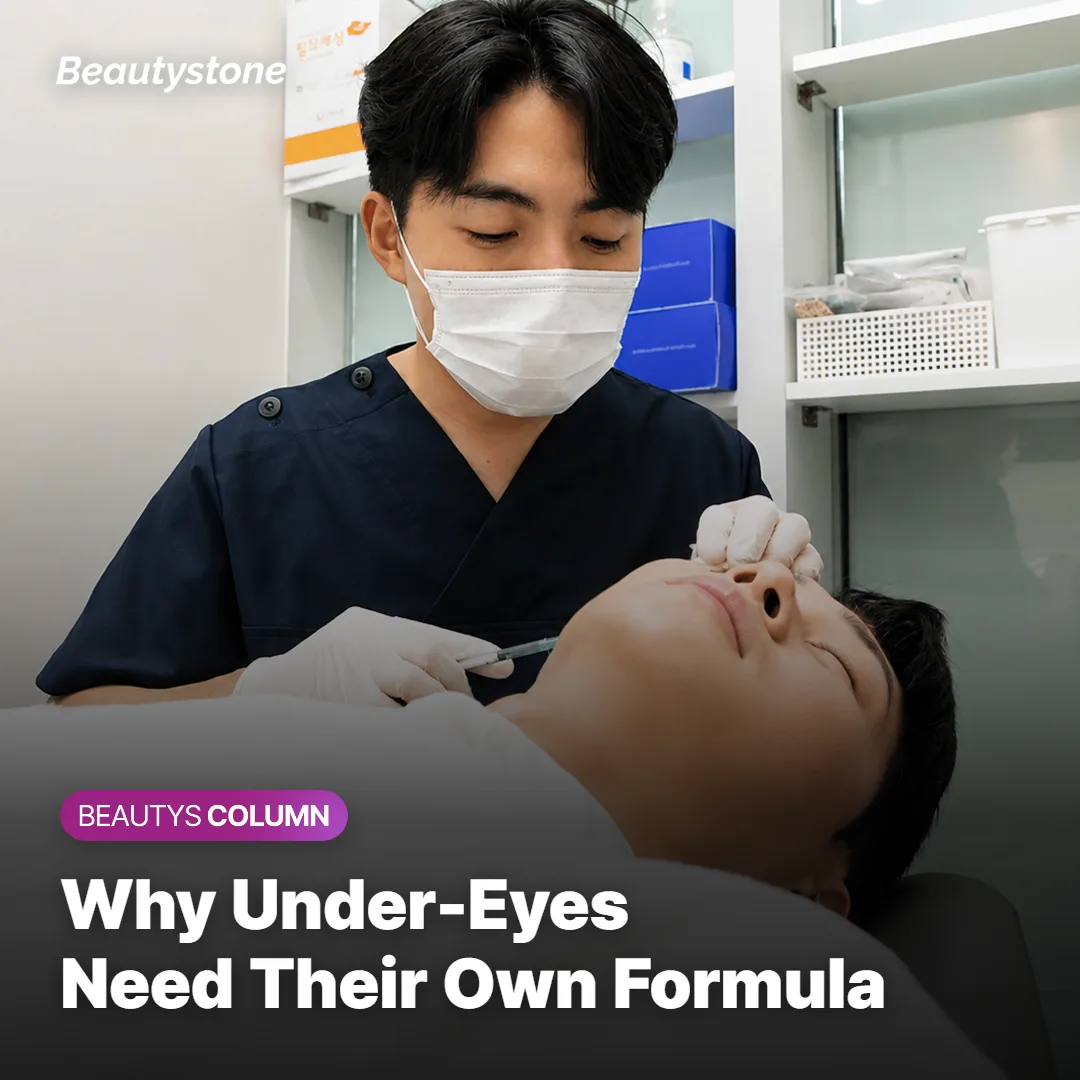
Why the Under-Eye Area Needs a Different Formula
Standard Juvelook isn't used around the eyes at all. The skin there is thin and full of small blood vessels, and the larger particle size in the standard formula raises the risk of small nodules or lumpy, uneven texture if it's placed too close to the surface.
For that area, a separate product with a finer particle size, often marketed as Juvelook Eye, gets used instead. It spreads more smoothly under thin skin and is far less likely to feel bumpy afterward. If under-eye hollowing and fine lines are part of what you're trying to address, this usually means treating the rest of your face with standard Juvelook and the eye area with the finer formula as a separate, deliberate step, not the same product used everywhere.
What Should You Ask Before Treatment?
A more useful question than "how many vials do I need" is "how are you planning to distribute this across my face." A provider who walks through where volume is actually lacking, area by area, is generally paying closer attention to dose than one who leads with a flat package recommendation.
- Ask for a breakdown by area: how much is going where, and why, rather than a single total number.
- Bring up your specific concern: texture and fine lines call for a different plan than visible volume loss around the cheeks or temples.
- Ask whether staging is an option: starting with one to two vials, then reassessing in a couple of months, is a reasonable and common way to avoid overcorrection.
If three or more vials are recommended right away, it's worth asking what specifically about your face calls for that much, rather than assuming it's simply the safer or more effective option.
Side Effects & What to Expect
Swelling, mild bruising, and tenderness at the injection sites are common in the first few days and usually settle within a week to ten days. Some people notice small, temporary bumps right after treatment, which typically flatten out as the product settles.
Because Juvelook works by building collagen gradually, results aren't visible right away. Most people start noticing a difference in skin texture and firmness over four to eight weeks, with the effect continuing to build for a few months after that.
If you notice a lump that doesn't soften over several weeks, spreading redness, or pain that's increasing rather than the usual mild tenderness, that's worth bringing up with your provider rather than waiting it out. Individual results vary, and how your skin responds depends on your own collagen production, skin thickness, and how the dose was distributed.
The Bottom Line
A three-vial recommendation isn't wrong for every face, but it isn't the right starting point for most of them either. For typical early-stage aging, one to two vials distributed by area tends to be enough, and going beyond that only makes sense when volume loss and facial structure genuinely call for it.
The under-eye area is its own conversation entirely, since it calls for a finer formula rather than more of the standard product. And if overcorrection does happen, it isn't something that resolves quickly, since the collagen response builds in gradually over time.
Ultimately, the right dose depends on your own face, your goals, and how your skin has aged so far, not on which package happens to be offered. If you're weighing how much Juvelook actually makes sense for you, a consultation is the best way to find out. Beautystone is a clinic in Seoul's Hapjeong area, and you can see current offers at /en/promotion.
Frequently Asked Questions
Q1. How many vials of Juvelook do most people actually need?
For typical early-stage aging in your 30s or 40s, one to two vials distributed by area is the usual starting point. Three or more vials tend to be reserved for more significant volume loss paired with facial structure that can support that much added collagen response, not a default package.
Q2. What happens if I get more Juvelook than I need?
Because the collagen it stimulates doesn't just disappear, too much product concentrated in one spot can build up over months into fullness that looks overdone rather than natural. This shows up most often in smaller areas like the cheekbones, where there's less surface area to absorb the extra stimulation evenly.
Q3. Can Juvelook be used under the eyes?
Standard Juvelook generally isn't used there, since the skin is thin and the particle size raises the risk of small nodules or lumpy texture. A separate, finer-particle formula, often marketed as Juvelook Eye, is typically used for that area instead.
Q4. How long does it take to see results from Juvelook?
Since it works by gradually stimulating your own collagen rather than adding instant volume, most people start noticing a difference in texture and firmness over four to eight weeks, with the effect continuing to build for a few months afterward. Individual results vary.