Jaw Botox: Bone or Muscle? A 3-Second Test
If you're eyeing jaw Botox for a squarer lower face, there's a catch most ads skip: it only works on muscle, not bone. Here's a simple test to check which one you're dealing with before you book anything.

What Is Jaw Botox (Masseter Botox)?
If you've been told your square jaw calls for Botox, there's a catch nobody mentions upfront: Botox only works on one specific cause. So-called "jaw Botox" is really masseter Botox — an injection into the thick chewing muscle at the back of your jaw, not a treatment for bone. In this article, we'll cover how to tell whether your jawline width comes from bone or muscle, how the treatment actually works, what kind of timeline and results to expect, and the risks worth knowing about first.
The masseter is the muscle that does the heavy lifting every time you chew. When it's overdeveloped, it can make the lower face look wider or squarer than the jawbone underneath actually is. Botox is FDA-approved for a handful of conditions like chronic migraine, and providers use it off-label for masseter reduction — a well-established, widely practiced use, even though slimming your jawline isn't the original approved indication.
Injected in small doses directly into the muscle, it blocks the nerve signals that trigger contraction. Here's the part that gets skipped in most marketing: Botox relaxes muscle. It does nothing to bone. That distinction is the whole ballgame, and it's exactly why the next step matters so much.
Bone or Muscle? How to Tell in Under a Minute
Before you book anything, try this: clench your teeth together, hard, like you're biting down on something tough. Now press your fingers against the sides of your jaw, right where it curves back toward your ear.
Feel a firm, bulging lump pop up under your fingers? That's your masseter muscle flexing, and it's a strong sign you're a muscle-type candidate. Botox has a real shot at slimming that area down. Barely any change at all? That points toward a bone-type jaw, where the width comes from the jawbone itself rather than an overworked muscle — and Botox won't reshape bone, so expect a much more modest result, if any.
| What You Notice | Muscle-Type Jaw | Bone-Type Jaw |
|---|---|---|
| Clench test | Noticeable bulge under fingers | Little to no change |
| What it feels like | A firm, flexing lump | Smooth, unchanged contour |
| Botox response | Noticeable slimming over weeks | Limited to no visible change |
| Worth exploring instead | Masseter Botox | A consult on contouring options beyond injectables |
Most people fall somewhere on a spectrum rather than neatly into one camp, so this test is a starting point, not a diagnosis. A board-certified provider can confirm what's really driving your jawline width with a hands-on exam before you commit to anything.
How Does Masseter Botox Work?
Once it's confirmed you're dealing with muscle rather than bone, the mechanism is fairly simple. The masseter is a chewing muscle, and Botox temporarily blocks the nerve signals that tell it to contract. With less signal getting through, the muscle gradually works less with every bite.
A muscle that works less, shrinks — that's disuse atrophy, the same principle behind why an arm looks thinner after a few weeks in a cast. It's a gradual, natural process rather than an instant fix, which is part of why the timeline below matters so much.
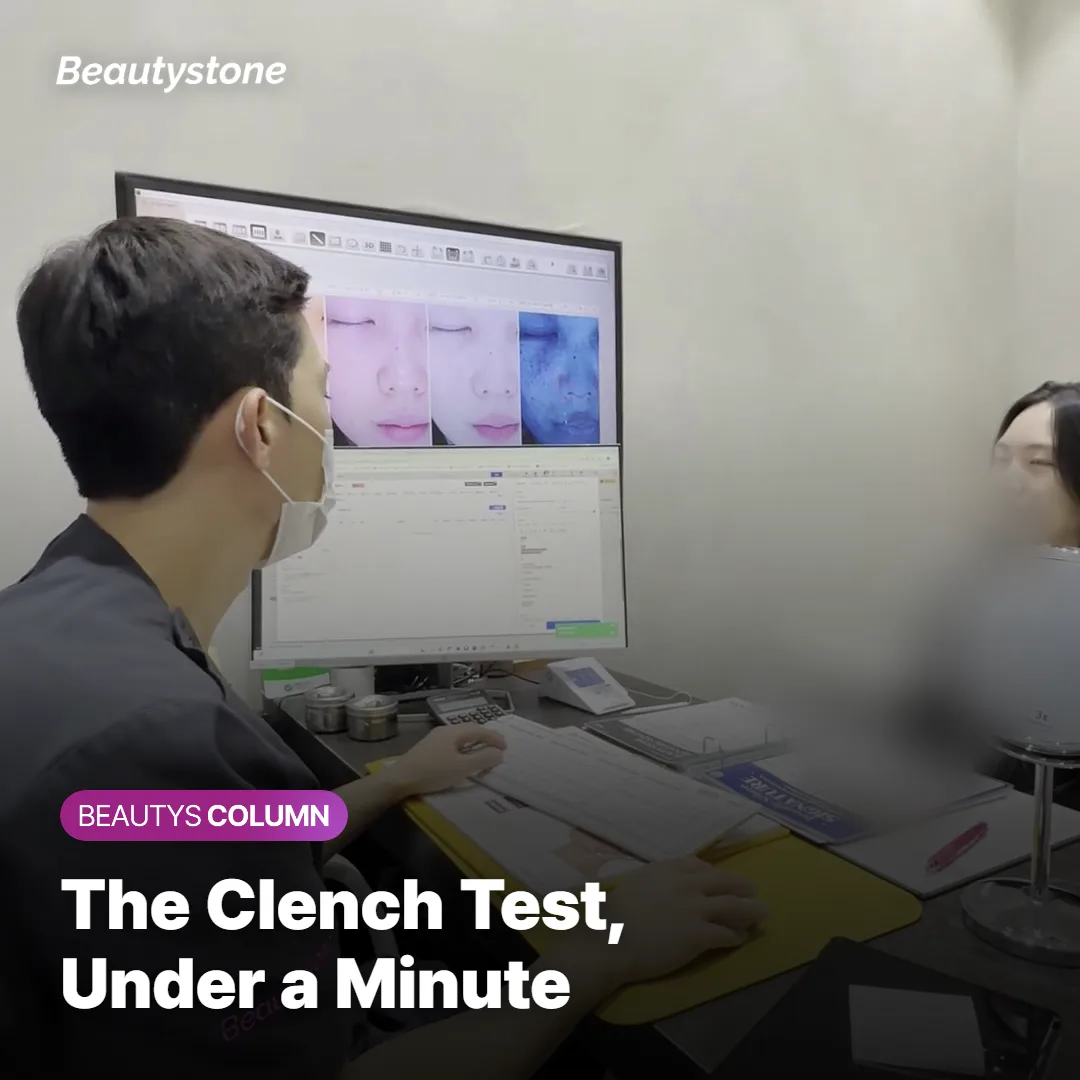
Dosing isn't one-size-fits-all. Your provider will typically feel the muscle directly during your consultation to gauge its thickness and spread before deciding how much to inject and where. Too little, and the muscle barely notices; too much, and you risk affecting how comfortably you chew.

Timeline: When Will You Notice Results?
Patience is part of the process here. Masseter Botox is a slow build, not an overnight transformation, so it helps to know what's normal at each stage.
- Days 1–3: No visible change yet. The muscle-relaxing effect is just beginning to take hold.
- Weeks 2–4: The muscle starts working less with each bite, and early softening becomes noticeable to close friends or family.
- Months 1–2: This is typically when the slimming effect is most visible, as disuse atrophy reaches its peak.
- Months 4–6: Results generally hold, though the muscle gradually regains activity as the effect wears off.
Results aren't permanent — once the muscle starts contracting normally again, it can rebuild some of its former bulk, which is why many people return for a touch-up roughly twice a year. Some patients find that after a few consistent rounds, the muscle stays smaller for longer between sessions, though individual results vary.

Side Effects & Risks
Masseter Botox is generally well tolerated, but it's not without trade-offs. Here's what tends to come up:
- Chewing fatigue: Tougher foods like steak or raw vegetables may feel more tiring to chew for the first couple of weeks, especially at higher doses.
- Mild bruising or swelling: Common at the injection sites and usually settles within a few days.
- Asymmetry: Uneven muscle response on each side is possible, though it usually evens out as the effect fully sets in.
- Facial hollowing: If the muscle shrinks too much, or too aggressively over repeated rounds, the mid and lower face can start to look gaunt rather than slim — more of a risk for older patients or anyone with less facial fat to begin with.
Serious complications are rare with masseter Botox, but as with any injectable, don't ignore warning signs. If you notice difficulty chewing that doesn't improve, drooping around your mouth, or swelling that keeps getting worse instead of settling down, contact your provider right away.
How Much Does It Cost?
Pricing for masseter Botox varies quite a bit by clinic, the number of units used, and your provider's experience, so there's no single number that applies to everyone. Dosing also tends to run higher than cosmetic Botox for wrinkles, since you're relaxing a genuinely thick muscle rather than a thin one, which factors into the total cost.
A consultation is really the only reliable way to get a number that applies to your face specifically. You can see current offers at /en/promotion, or check general pricing at /en/price.
Is It Worth It? Who's a Good Candidate?
If your clench test showed a clear, firm bulge and you're bothered by a squarer lower face, masseter Botox is generally worth considering. It's a low-downtime, reversible way to test whether a slimmer jawline actually suits you before committing to anything permanent.
It's a weaker fit if your test showed little to no muscle movement, since bone-type jaw width calls for a different conversation entirely — one that usually involves a facial plastic surgeon rather than injectables. It's also worth a second look if you already have a naturally slim or hollow lower face, since further muscle reduction could tip things toward looking gaunt rather than sculpted.
Either way, talk to a board-certified provider before deciding. A hands-on exam beats any at-home test, and they can factor in your facial fat, bone structure, and goals together.
The Bottom Line
- Clench your teeth and check for a firm bulge — that's the quickest sign you're dealing with muscle, not bone.
- Masseter Botox slims an overworked chewing muscle; it does nothing for jawbone width.
- Results build slowly over one to two months and typically last four to six months before a touch-up.
Like any procedure, it comes with trade-offs — you'll need to wait for full results, and they fade over time. Ultimately, the choice depends on which type of square jaw you actually have, and how comfortable you are with a gradual, non-surgical approach.
If you're considering jaw Botox, a consultation is the best way to find out what fits you. Beautystone is a dermatology clinic in Seoul's Hapjeong area — see current offers at /en/promotion.
Frequently Asked Questions
Q1. Does Jaw Botox Hurt?
Most people describe it as a series of quick pinches rather than real pain, since the injections are shallow and the session itself only takes a few minutes. Some clinics offer numbing cream beforehand for anyone who's especially sensitive.
Q2. How Long Does Jaw Botox Last?
Results typically build over one to two months and hold for around four to six months before the muscle gradually regains its activity. Many people schedule a touch-up roughly twice a year to maintain the effect.
Q3. How Much Does Jaw Botox Cost?
Cost varies by clinic, the number of units used, and how much muscle needs treating, so there's no flat number that applies to everyone. A consultation is the most reliable way to get pricing specific to your face.
Q4. Can Jaw Botox Make My Face Look Too Thin?
It can, if the muscle is over-treated or if you already have a naturally slim or hollow lower face. That's why dosing is usually adjusted to your starting muscle thickness rather than a fixed amount for everyone.