How to Pick a Safe Dermatology Clinic
Reviews and low prices are the easiest things to compare when you're choosing a dermatology clinic, but neither one tells you whether the provider is board-certified or the equipment is well maintained. Here's what to check instead.

Last updated: July 2026
If you've ever picked a dermatology clinic because it had the most five-star reviews or the cheapest laser package on the block, you're in good company — that's how most people shop for skin care. The problem is that neither number tells you whether the person holding the device actually knows what they're looking at.
A review score reflects marketing as much as it reflects outcomes, and a rock-bottom price usually means something's been cut somewhere. In this article, we'll cover what board certification in dermatology actually means, why equipment upkeep matters almost as much as who's operating it, and the specific questions worth asking before you book anything.
What Actually Makes a Dermatologist "Board-Certified"?
A board-certified dermatologist has been through medical school, a one-year internship, and several years of a dermatology-specific residency before sitting for a specialty board exam. That's a meaningfully longer and more specialized track than a general practitioner who's added lasers or injectables to their practice on the side.
Here's the part that catches a lot of people off guard: in most places, any licensed physician can legally perform cosmetic procedures, regardless of their specialty training. So a clinic with "dermatology" on the sign doesn't automatically mean the person treating you is a board-certified dermatologist. It's worth asking directly, rather than assuming the sign settles it.
Why That Distinction Isn't Just a Title
A treatment device doesn't make decisions on its own — the person running it does. And that's exactly where training shows up, or doesn't.
Here's a scenario that comes up more often than you'd expect: someone books a consultation because their pigmentation looks worse after a laser treatment somewhere else, not better. It turns out the discoloration was never sun damage to begin with — it was post-inflammatory hyperpigmentation, dark patches that show up after skin has already been irritated. Treating that with the same aggressive setting used for sun spots doesn't help. In fact, it tends to make things worse.
Catching that distinction before anyone turns on a machine is exactly the kind of judgment call years of residency training are supposed to build. That's also why a real first visit matters: skin type, medical history, and any previous treatments should get reviewed before a plan gets decided, not after.

Equipment Matters as Much as the Provider
These days, a lot of people research clinics by scanning the equipment list on a website. That's a reasonable place to start, but it only tells part of the story.
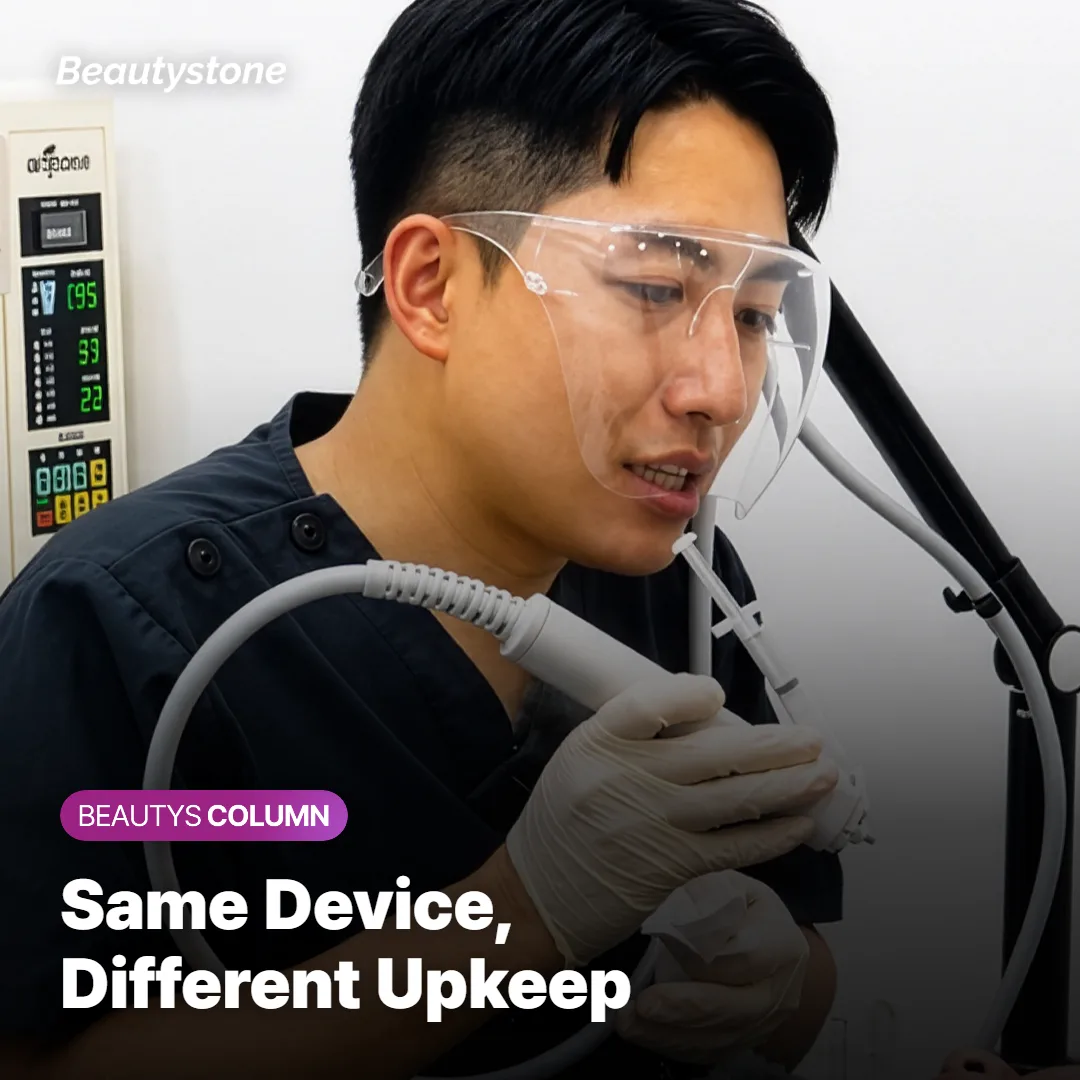
The same device name can mean very different things depending on whether it's a verified original, how consistently it's been serviced, and how often parts like the handpiece or tip get replaced. A handpiece that's overdue for replacement can deliver energy unevenly across the treatment area, which usually shows up as weaker results in some spots and a higher chance of irritation or burns in others.
One simple question, asked before you book, tends to say a lot: "When was this device last serviced?" How a clinic answers that can tell you almost as much as its price list does.
Comparing Your Clinic Options
There isn't one type of clinic that's automatically the right call — it depends on what you're looking for. Here's a general breakdown of what tends to differ across the most common setups.
| Category | Large Franchise Clinic | Neighborhood Clinic | Physician-Owned Specialist Clinic |
|---|---|---|---|
| Who treats you | Rotates often — worth confirming ahead of time | Mix of board-certified and general practitioners | The physician sees you directly |
| Equipment | Wide range, upkeep can vary by location | Usually core, general-purpose devices | Concentrated around the physician's specialty |
| Consultation depth | Often brief, higher patient volume | Tends to focus on treating a diagnosed condition | More time for an individual consultation |
| Cost | Frequent package discounts | Comparatively affordable | Mid-to-higher, usually more transparent |
| Worth confirming | Which provider you're actually assigned to | Their experience with cosmetic, not just medical, cases | The physician's specific track record |
None of these setups is automatically the wrong choice. A specialist-run clinic that's excellent at treating pigmentation isn't necessarily just as strong on lifting or contouring, so the real question isn't which category sounds best on paper — it's whether this specific provider's focus lines up with what you actually need.
Three Questions Worth Asking at Your Consultation
A short consultation can tell you a surprising amount, as long as you ask the right things instead of just listening to the pitch.
- Is the provider treating me board-certified in dermatology? It's a fair, direct question, and a clinic confident in its staff will answer it without hesitation.
- What does this provider treat the most? Ask what they specialize in and whether it actually matches what brought you in — a great record with acne scarring doesn't guarantee the same skill with lifting devices.
- When was the equipment last serviced? A specific answer, not a vague one, is a decent sign the clinic actually tracks its own maintenance schedule.
Working through these questions upfront can make a first visit run longer than you expected. That's a fair trade-off in most cases — it usually costs less, in time and in your skin's condition, than starting over after a mismatched plan.
Safety Red Flags to Watch For
A handful of signs are worth taking seriously during a consultation, before you commit to anything.
- Nobody can tell you who's actually board-certified. Vague answers about staff credentials are a reason to ask again, not to let it go.
- The provider skips your history. If nobody asks about your skin type, past treatments, or reactions before recommending a plan, that's a shortcut worth questioning.
- Equipment questions get brushed off. A clinic that can't or won't say how a device is maintained hasn't necessarily done anything wrong, but it also hasn't given you a reason to trust that it has.
Mild redness or swelling in the day or two after a procedure is common and usually settles on its own. If you notice spreading redness, blistering, or pain that's getting worse instead of better, contact your provider right away rather than waiting to see if it resolves.

The Bottom Line
Here's the short version:
- Board certification is a meaningfully different track than a general medical license, and it's fair to ask about it directly.
- Equipment that's genuine and well maintained matters just as much as who's operating it — ask when it was last serviced.
- A slightly longer first consultation usually costs less than course-correcting a mismatched plan later.
Like most decisions about your skin, this one comes with trade-offs — a longer intake, a price that might not be the lowest on the list. Ultimately, the choice depends on your skin, your goals, and your budget.
If you're weighing dermatology clinics and want to know your options actually fit your skin, a consultation is the best way to find out — see current offers at /en/promotion. Beautystone is a dermatology clinic in Seoul's Hapjeong neighborhood.
Frequently Asked Questions
Q1. How can I check if a dermatologist is actually board-certified?
Ask directly during your consultation — a clinic confident in its staff will answer without hesitation. In Korea, you can also verify a doctor's specialty through the Health Insurance Review and Assessment Service (hira.or.kr) rather than relying on the clinic's own website alone.
Q2. Does a bigger, flashier clinic mean better equipment or care?
Not necessarily. Clinic size says more about marketing budget than about who's treating you or how well the equipment is maintained. A smaller, physician-owned clinic can have more consistent equipment upkeep than a large franchise with locations that vary.
Q3. What if a treatment plan doesn't account for my skin type?
The most common issue is post-inflammatory hyperpigmentation, or dark patches that show up after skin has been irritated by too aggressive a setting for that skin type. It's one of the clearest signs a plan wasn't actually built around your case.
Q4. What should I do if I have a bad reaction after a procedure?
Mild redness or swelling in the first day or two is common and usually settles on its own. If it spreads, blisters, or keeps getting worse instead of better, contact your provider right away instead of waiting it out.