Hip Filler Looks Uneven? Here's What to Do
A little asymmetry in the first few weeks after hip filler is common, not a sign the treatment failed. Here's why it happens, how the timeline affects what you should do, and the signs that mean it's worth calling your provider sooner.

If you’ve looked in the mirror after hip filler and noticed one side looks fuller, sits a little higher, or just reads differently than the other, you’re not alone. It’s one of the most common concerns people bring up in the first few weeks after treatment, and it’s easy to jump straight to "did something go wrong?", especially when you’ve put real time and money into the result.
Here’s the short version: early asymmetry is usually part of normal healing, not a sign the treatment failed. In this article, we’ll cover why some unevenness is common right after hip filler, the most frequent causes behind it, how the timeline should shape what you do next, and the red flags that mean it’s worth calling your provider sooner rather than later.
Is Asymmetry After Hip Filler Normal?
The short answer? Yes, at least in the early weeks. Hyaluronic acid (HA) filler doesn’t look like its final self the moment it’s injected. It takes time to settle into the surrounding tissue, and swelling almost never resolves at exactly the same pace on both sides. On top of that, very few people’s bodies are perfectly symmetrical to begin with, small differences that existed before treatment can simply become more visible once volume is added.
Research on filler outcomes backs this up: careful pre-treatment assessment and proper technique are described as key factors in reducing the odds of asymmetric or uneven filler results, which is another way of saying that some early unevenness is expected, and that a lasting difference is the exception rather than the rule. The main thing to remember is that what you see in the mirror a few days after treatment isn’t necessarily your final result. Give your body time to finish swelling down and settling before deciding whether the difference is real.
Why It Happens: Common Causes of Hip Filler Asymmetry
A handful of factors explain most early asymmetry, and knowing which one applies to you can take a lot of the worry out of the waiting period.
- Uneven swelling: One side often swells a bit more, or takes longer to go down, than the other, which can make two sides look different for a while even when the same amount was injected.
- Filler still settling: HA filler needs time to integrate with the surrounding tissue, and that process doesn’t always finish at the same rate on both sides.
- Pre-existing asymmetry: Most people’s hips weren’t perfectly symmetrical before treatment either, added volume can make a difference that was always there more noticeable.
- Sitting and pressure habits: Spending more time sitting or lying on one side can affect how filler settles while it’s still soft.
- Uneven injected volume: Less common, but occasionally the two sides simply received different amounts, the one cause on this list that’s more likely to need an actual adjustment rather than time.
The first three causes account for the vast majority of early asymmetry, and they tend to resolve on their own as healing finishes. The last one, a real volume difference, is the type of cause more likely to need a conversation about correction, which is exactly why timing matters so much here.
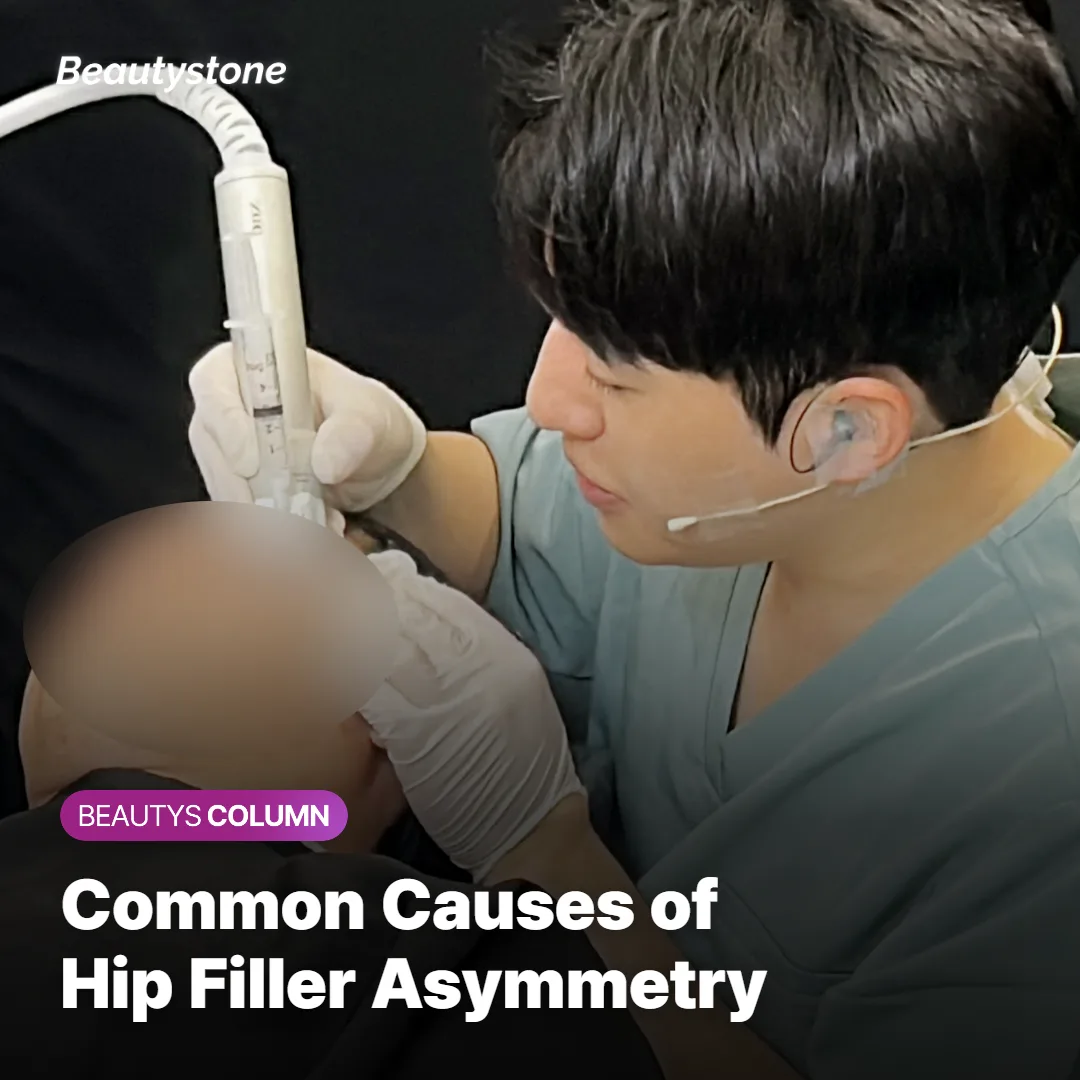
How Hip Filler Settles Beneath the Skin
Hip filler is placed in the subcutaneous fat layer, the layer just beneath the skin, rather than near the surface. That’s a deeper, thicker layer than what’s typically used on the face, and it’s part of why settling takes noticeably longer here. Once injected, the gel needs to integrate with the surrounding tissue, and that process, along with the swelling that comes with it, is what accounts for most of the early differences people notice between sides.
It’s also worth remembering that the hip and buttock area is a weight-bearing zone. You sit on it, lean on it, and put pressure on it constantly, which can affect how evenly things settle compared with an area like a cheek or jawline that mostly just sits still.
Your Recovery Timeline: When It Should Start Evening Out
Here’s roughly how the recovery timeline tends to unfold:
| Timeframe | What's Happening | What to Do |
|---|---|---|
| Day of–1 week | Swelling is at its peak on both sides | Let it settle; avoid extra pressure |
| Weeks 2–4 | Swelling fades, filler keeps settling | Check your sitting and pressure habits |
| Weeks 4–6 | Settling is wrapping up | Note whether a difference is still there |
| 6+ weeks | Swelling and settling are essentially done | Bring up a lasting difference with your provider |
Around the six-week mark is generally when swelling and settling have finished for most people, which makes it the point where a lingering difference is more likely to reflect the actual result rather than a temporary phase. Before that, the more useful move is to keep an eye on posture and pressure habits and let the healing process play out. If a real difference is still there after six weeks, that’s the point where it’s worth bringing up with your provider.

Side Effects & Risks: When to Call Your Provider Sooner
Bruising, swelling, and mild tenderness are common in the first week and aren’t cause for concern on their own, most of it settles within a week or two. What’s not typical, and worth flagging regardless of how much time has passed, is a different story.
- Increasing pain: Discomfort that’s getting worse instead of gradually easing isn’t part of a normal recovery.
- Unusual firmness or heat: A hard, warm area that feels different from the surrounding tissue is worth checking out sooner rather than later.
- Spreading redness or fever: These aren’t asymmetry issues, they’re signs that need medical attention.
If you notice spreading redness, fever, or pain that’s getting worse rather than easing, seek medical care right away rather than waiting out the usual timeline.
Before You Consider Correction: A Quick Checklist
If you’re still seeing a difference and wondering whether it’s time to do something about it, run through this before booking a correction appointment:
- Has it been six weeks? If not, give swelling and settling a bit more time before judging the result.
- Check your habits: Have you been sitting or lying on one side more than the other? That alone can skew things while filler is still soft.
- Compare, don’t just glance: Photos from the same angle and lighting, taken a few weeks apart, show whether the gap is closing far better than a quick glance in the mirror.
- Rate the difference honestly: A subtle variation most people wouldn’t notice is different from an obvious, easily visible gap.
- Watch for pain, heat, or firmness: Any of these, on their own timeline, mean it’s worth calling sooner rather than waiting.
Correction itself, when it’s actually needed, usually comes down to one of two moves: dissolving some filler with hyaluronidase, an enzyme that breaks down HA filler, on the fuller side, or adding a small amount to the side that’s lagging behind to bring the two into balance. Which approach makes sense depends on what’s actually causing the difference, and that’s a conversation to have with the provider who did your original treatment once you’ve given healing enough time to finish.
The Bottom Line
Here’s the recap:
- Some asymmetry in the first few weeks after hip filler is common, not a sign something went wrong.
- Swelling, ongoing settling, and pre-existing body asymmetry explain most of it, and all three tend to resolve with time.
- Around six weeks is the point where a lingering difference is more likely to be the real result rather than a temporary phase.
- Pain, unusual firmness, or spreading redness are signals to call your provider sooner, regardless of the usual timeline.
Like most cosmetic procedures, hip filler comes with a bit of a waiting game built in, and jumping to correction too early can mean fixing something that would’ve resolved on its own. Ultimately, the right next step depends on your timeline, how pronounced the difference actually is, and what your provider sees at a follow-up visit.
If you’re noticing asymmetry after hip filler, a consultation is the best way to find out what’s actually going on. Beautystone is a dermatology clinic in Seoul’s Hapjeong area, current information is available at /en/promotion.
Frequently Asked Questions
Q1. Is it normal to have asymmetry after hip filler?
Yes, at least in the early weeks. Hyaluronic acid filler takes time to settle into surrounding tissue, and swelling almost never resolves at exactly the same pace on both sides, so some early unevenness is expected rather than a sign of a failed treatment.
Q2. What causes hip filler asymmetry?
The most common causes are uneven swelling between sides, filler that's still settling into place, and the fact that very few bodies are perfectly symmetrical to begin with — small pre-existing differences can simply become more visible once volume is added.
Q3. How long until hip filler results even out?
It takes time for swelling to fully resolve and for filler to settle, so what you see in the mirror a few days after treatment isn't necessarily your final result. Give your body time before deciding whether a difference between sides is lasting.
Q4. When should I contact my provider about hip filler asymmetry?
If the unevenness doesn't start improving as swelling goes down, or if it's accompanied by pain or other concerning symptoms, it's worth reaching out to your provider sooner rather than waiting it out on your own.