Crow's Feet Botox: Does More Mean Better?
When it comes to crow's feet Botox, too much can freeze the muscles around your eyes and leave you with an unnatural expression when you smile. Learn the principles behind proper dosage control for natural-looking results.


💡 Before You Read — Quick Q&A
Q. Doesn't more Botox around the eyes
mean better wrinkle reduction?
A. Up to a point — yes.
But beyond that point, the muscles around your eyes barely move when you smile,
and your expression can end up looking stiff and unnatural.
Q. Why do crow's feet form in the first place?
A. Every time you smile or squint,
the orbicularis oculi muscle surrounding your eye contracts repeatedly,
and over time those repeated folds become etched into the skin.
"Eye Botox effectively softens crow's feet,
but too high a dose can freeze the eye area when you smile, making expressions look unnatural —
which is why precise dosage control is everything."
— Dr. Wi Young-jin, Beautystone Clinic Seoul
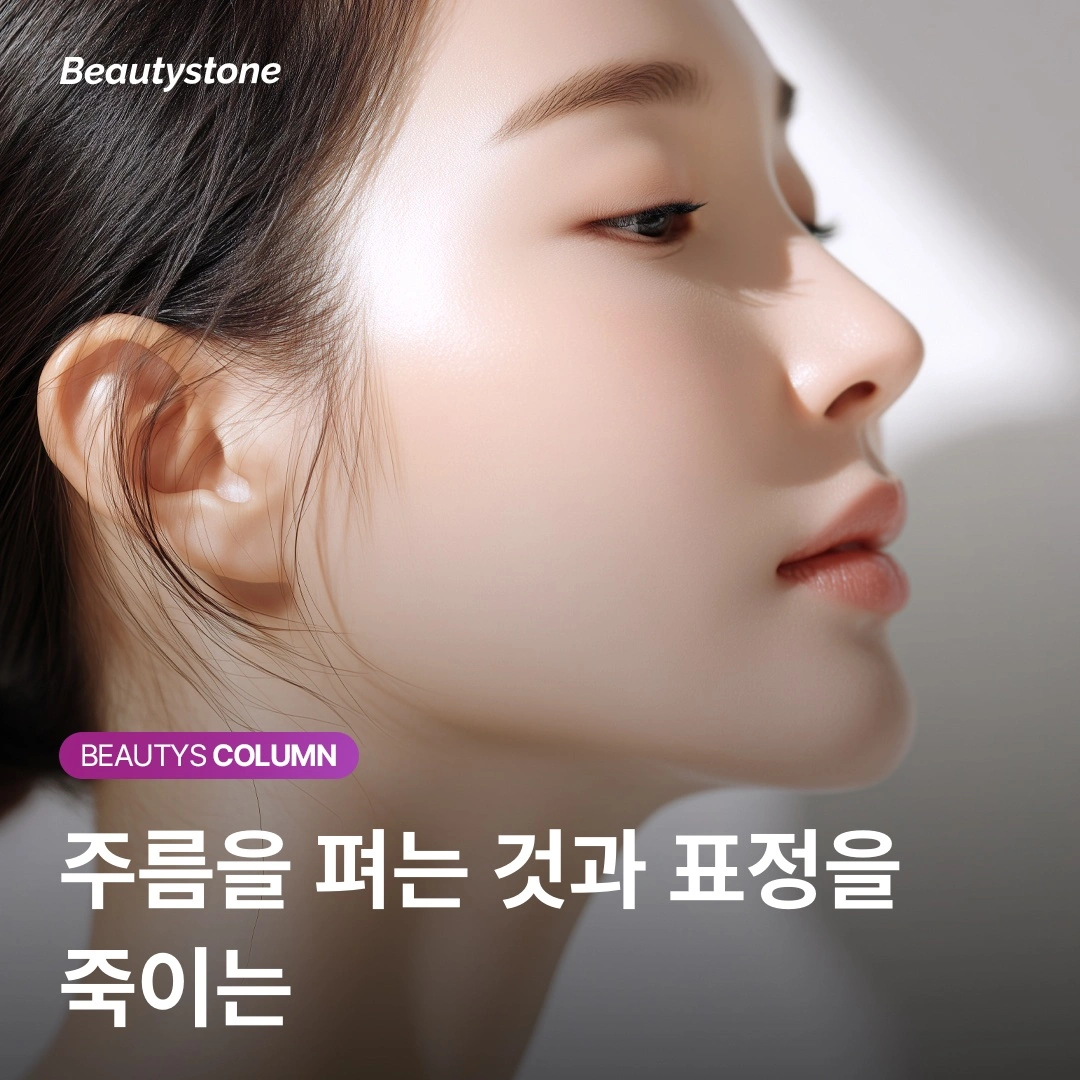
Somewhere Between
Smoothing Wrinkles
and Erasing Your Expression
Crow's feet — you know the ones.
Those fan-shaped lines that spread from the outer corners of your eyes when you smile.
The cause is straightforward.
The orbicularis oculi muscle that wraps around the eye
contracts every time you smile or squint,
and after tens of thousands of repetitions,
those folds become permanently creased into the skin.
Botox works by temporarily blocking the contraction signals to this muscle,
reducing its movement and, in turn, softening the appearance of those wrinkles.
But here's the key thing to understand.
The orbicularis oculi isn't just a "wrinkle-making muscle."
It's also the very muscle responsible for that natural, vibrant eye smile —
the way your eyes gently narrow and your outer corners lift slightly when you genuinely smile.
This is where things get tricky.
A higher dose of Botox will definitely smooth out the crow's feet.
But at the same time, the area around your eyes barely moves when you smile.
Your mouth curves up, but your eyes stay completely still —
that slightly off, unnatural look is something many patients have experienced firsthand.
That feeling of "why don't my eyes smile when I smile?"
Honestly speaking,
a natural eye smile will always come with some degree of wrinkling.
Rather than aiming to eliminate every single line,
the smarter approach is to calibrate the dose so that
'the eyes move naturally when smiling, while reducing the most prominent folds.'
👨⚕️ Key Takeaway from Dr. Wi Young-jin:
Eye Botox does effectively reduce crow's feet.
However, since the orbicularis oculi is also the muscle that creates your eye smile,
too high a dose can cause the eye area to look frozen
and stiff when you smile.
The right approach is to prioritize preserving natural expression first,
and then reduce wrinkles as much as possible within that boundary.

Here's How I
Determine the Right Dose
It varies by case, but here's my general approach.
During the consultation, I always ask the patient to smile for me.
I first assess how pronounced their crow's feet are when smiling,
and how expressive their eye smile is.
For patients whose eyes barely narrow when they smile — mostly just the corners of the mouth moving —
a slightly more aggressive dose can be used without significantly altering their expression.
On the other hand, for patients whose eyes fully crinkle shut when smiling,
I recommend starting with a lower dose and improving gradually over 2–3 sessions.
This is a common misconception worth clearing up —
with eye Botox, it's not about "how much" but rather
"where exactly and how it's placed" that makes all the difference.
Even with the same dose, the results vary significantly depending on whether the injection is concentrated toward the outer corner,
or distributed across the entire muscle.
That said, this approach has its trade-offs.
With a conservative dose,
the wrinkles won't disappear completely.
For patients who want a dramatically smooth result right away,
this may feel underwhelming.
However, for those who want visible improvement while maintaining a natural expression,
this is still the best approach available.
Quite a few patients who said they felt unnatural after receiving treatment elsewhere ten times
found their ideal results within just 2–3 sessions here at our clinic after proper dose adjustment.
Frequently Asked Questions
Q1. Will eye Botox cause drooping or Swelling around my eyes?
A. The skin around the eyes is thin and highly vascular,
so in rare cases, minor Bruising or temporary Swelling may occur.
In particular, when injections are placed in the lower portion of the orbicularis oculi,
there is a very rare possibility of slight puffiness
or a subtle drooping appearance beneath the eye.
This typically resolves naturally within 2–4 weeks.
An experienced injector can avoid or minimize this risk,
so it's a good idea to mention any concerns during your consultation.
Q2. How long do the results of eye Botox last?
A. Generally around 3–4 months.
However, since the eye area involves frequently used expression muscles,
the effects tend to wear off faster compared to other areas.
With consistent treatment, the muscle gradually becomes thinner,
and over time, you'll find that a smaller dose is needed to maintain the same results.
This has been Dr. Wi Young-jin from BeautysDoctors.
Further Reading
▶Coretox for the Forehead & Eyes, Regular Botox for the Jaw? The Optimal Combination by Area
▶A Pre-Wedding Skincare Routine for Brides: A Day-by-Day Guide Written by a Specialist
▶Peanut-Shaped Face: Can Temple Filler Really Fix It? An Honest Review
▶Sculptra Nodule Side Effects: How to Prevent Them
▶5 Criteria for Choosing the Best Dermatology Clinic in Hongdae, Straight from a Specialist